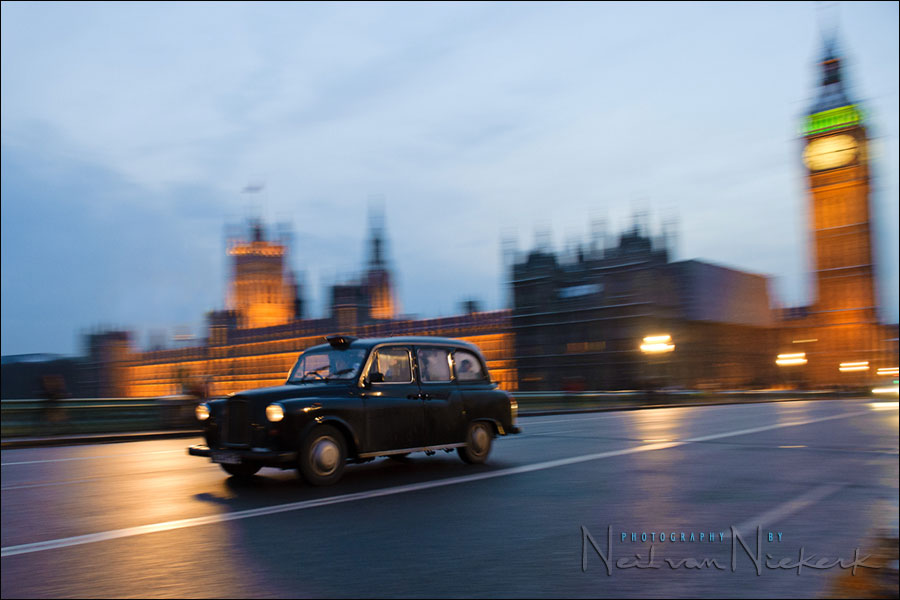
Using faster shutter speeds for sharper photos
If your images are too soft, chances are it is because your chosen shutter speeds are too slow.
A frequent complaint I see on the photography forums, is where the photographer say they used a shutter speed of 1/60th but still have blurry images. Somewhere along the way the urban legend seem to have arisen where 1/60th is that magic shutter speed where we will be assured of sharp images. But of course things are a little more complex than that.
There is a rule of thumb which has it that the inverse of your focal length should give you a good minimum hand-holdable shutter speed. A number of years back, the most common lens found on 35mm cameras were the 50mm lens – which then became the “standard” lens. Therefore that rule of thumb implied that 1/50th would be considered the minimum hand-holdable shutter speed for the 50mm lens. Of course 1/50th was rounded up to 1/60th which is an actual shutter speed.
But this is the minimum hand-holdable shutter speed. Which means you’d still have to be very careful, and be very deliberate in your technique to make sure you don’t get camera shake. Brace yourself. Lock your elbows in. Steady breathing. Gently squeeze the shutter button. (Don’t jab at the shutter button.) All kinds of little techniques to make sure that at that slow a shutter speed – and yes, 1/60th is slow – you don’t get camera shake. All of this means that you still have to be very careful at that shutter speed. 1/60th won’t magically free you of the possibility of blurry images.
Avoiding camera shake
The usable shutter speed at which you won’t get camera shake, depends on various factors:
- focal length of the lens you’re using,
- crop factor of your digital camera (and yes, this does have an effect),
- how still you can hold,
- how still your subject is,
- and if your subject is moving,
– how close he is to you,
– what angle he is moving towards you,
– what speed he is moving at, - how much camera shake you or your clients would tolerate,
… and so on.
There just aren’t any specific settings anyone can give you.
At best, there are suggestions. But as with everything, slavishly holding to these will often lead to problems without any understanding of why there is a problem in the first place.
Even though I do use slow shutter speeds , this is most often with my subject in lower light than the background allowing me to use flash to help freeze any movement (or make it less noticeable.) I also use stabilized / vibration reduction lenses. They are immensely useful in reducing camera shake. Of course they don’t help at all with subject movement.
Flash won’t freeze movement effectively in low light if your subject is evenly lit and you simply add some flash. This technique works best when your subject is shaded or darker than the background. Or alternately, your entire scene (and subject) is dark by about 2 stops or more under your ambient meter reading, and you add flash to expose correctly for your subject.
Back to the original topic:
In short, if your shutter speed is 1/60th as a default, then your shutter speed is most likely too slow.
So what is my starting point? Obviously this is geared towards me being a wedding and portrait photographer (and not a sport photographer for example), but I most often start at 1/250th when working in bright light. The reason for this is that this is (close to) my maximum flash sync speed. (There are certain implications with that specific choice.)
Even when I don’t use flash, 1/250th remains a good starting point when working in bright light, giving me a fairly high shutter speed. In comparison to a slower shutter speed, it helps reduce camera shake. For portraits I normally want a wide-ish aperture, and in overcast light or shade, a faster shutter speed forces a wide aperture already.
Don’t be afraid to nudge your ISO higher in order to get a faster shutter speed. Keep in mind that it is easier to fix high-ISO noise than it is to try and fix a blurry image.
Now, about the photo at the top:
The photo of the London taxi cab careening past, with the Houses of Parliament and Big Ben in the background, was taken during a trip to London. I wanted to get some iconic images of London … and what better than a London taxi cab careening over the bridge next to the Houses of Parliament and Big Ben? I panned with the moving vehicle, using a wide-angle focal length. This caused the background to streak in an interesting way. It took multiple attempts though to have a few images that worked.
camera settings: 1/30 @ f5.6 @ 1600 ISO
In this case, the slower shutter speed was intentional for effect.
thanks a lot for this arcitle…. I was also one of these who thought that 1/60 is enough and than wondering why images are not sharp enough…
Thanks a lot Neil!
Neil, lemme start off by saying…. thank you for providing this site and it’s wealth of information!!!
This post has pushed my curiosity about Auto-ISO to the point of needing to ask……. do you ever use Auto-ISO? what words of wisdom can you offer to ween me off of using it? I’m starting off in the ‘biz’ and keep wigging out/panicing every time i go into a shoot(event,wedding, portrait) and try shooting full manual, and that’s with me still leaving auto-iso on, so I guess you could say that I’m really not even shooting full manual. (btw, i shoot with a D50 and D80 – the D50 seems to be better at ISO noise handling)
This is why it’s so important to get a camera that allows you to bump up the ISO beyond 1600 (e.g. Canon 5D). Neil frequently uses ISO settings of 1600 and higher. With the Canon 5D Mark II, due out in November, I’m anxious to see how the camera performs at 25,600 ISO. You should be able to take photos in the dark and still have a high shutter speed!
Thanks for the tips. My starting point is normally at 1/125 ISO 100 or 400 if its indoor or overcast. I do like to shoot at 1/45 sometimes w/ flash.. and yes it is soft. hmmm, maybe i need to stay higher my ISO. I normally do not go past 400. I guess i should kick it up to 800 or 1600 (since i have the 40D)… anyway, thanks for the tips. appreciated!!!
thnx again Neil! I look forward to being able to attend one of your workshops in the future. Do you think that Charlotte is the closest you’ll ever come to Columbia, SC?
Since we are talking about increasing ISO to get a reasonable shutter speed, does anybody here use noise reduction software? I’m debating whether I should buy such software.
Stephen, there are some cameras, like the Canon 5D (and hopefully the 5D Mark II), that allow you to increase the ISO beyond 400 without noticible noise. Neil has said that he doesn’t use noise reduction software. As you can see, his photos, even at 3200 and 6400, look just fine, even when enlarged. Having a good camera makes a big difference.
Hi Linda, thanks for letting me know that Neil does not use noise reduction software. I’m using a Nikon D300 and at ISO 1600, I can see some noise at 100% zoom. It’s not prominent when viewed at a “normal” size. I haven’t tried changing the camera’s noise reduction to “high.” The D700 and D3 apparently have better noise control, but I can’t afford either at the moment.
I just don’t know how much noise is acceptable for a given image size.
My hubby is a sports photographer and he always starts at 250 and works his ISO and compensation around that shutter speed. We’ve found in doing weddings this works to his advantage about 1/2 the time ;) He’s an ‘S’ man and I’m the ‘A’ lady who loves to shoot based on aperature and DOF. Between the two of us, it works!
Brett, to expand on Neil’s reply a bit… A couple years ago I bought my first SLR (the D50… cheers), having hit the ceiling of my P&S’s manual control. WB and ISO were the first things I learned, then shutter speed and aperture. I agree w/ Neil–don’t hesitate to bump up ISO to get the shot. On the D50, I can tell no difference between ISO 400 and 200, so I use 400 w/o a second’s hesitation. Even 800 and 1600 will look fine if you nail exposure, and don’t view it only at 100% (no one but you will do this). Indoors, start with 400, and go as high as you need to get the shutter speed you need for a sharp photo.
It makes sense the D80’s noise would be more obvious than the D50’s, as the D80 crams more pixels on the same sized sensor. But again, noise in general should be one of the least of your concerns. People talk about it a lot more than it matters.
Hope that helps.
Neil, great blog. Love it. Making flash not LOOK like flash is a big interest of mine.
Stephen, I have a D300 and have found it looks fine at ISO 3200. I had to use it shooting roller derby indoors with awful low light at high enough shutter speeds to freeze action; do you think noise is a problem here?
https://www.flickr.com/photos/pejophoto/sets/72157607978946337/
I’ve used ISO 6400 enough to know that it’s fine too, though gets ugly fast if you underexpose. I’ll use it if I have to to get the shot. Yes, you can see noise at 100%, but you’re the only one looking at your images at 100% and dissecting them for noise. Print some well-exposed ISO 3200-6400 shots at 8×10, resize them to your desktop, ask a non-photographer with a good eye how they look, and judge for yourself.
I don’t bother w/ NR software either–I’d rather shoot. :)
Hi Brent,
Thanks for your comments. I looked at your photos. I agree that I don’t see any obvious noise at those image resolutions.
I was referring to this picture of mine.
Looking at it at a non-100% view, one cannot see much noise. When I looked at it at 100%, I could see all sorts of noise on the lane.
You’re right that I would be the only one seeing images at 100%, so if I resize them for public consumption, the noise will be manageable or unnoticeable. Thanks.
Neil,
Thanks for sharing your wealth of knowledge w/ us… Fairly new to photography and I some times shoot nightclub events so i have a question for you regarding flash bounce. I dont like the straight on-camera flash i’m currently getting and was wondering if i bounce my flash behind me (after reading your wedding flash bounce) or side way, etc, would i still get enough good light on my subject being that the venue has little or no light some times? Also, because the scene is fairly dark my camera sometimes has a hard time focusing–is there a way to over come this? I shoot in manual w/ a rebel XTI, 580EX and Tamron 28-80mm.
Greatly appreciate any help you could give.
Thanks,
Andrew
What does “Bounce flash behind me”, mean?
[…] My preferred approach to photographing the processional: (and I have to stress that this is my approach and might not be universally applicable) find my settings so that the available light is about 1 stop (or a little more) under-exposed, and then bounce flash behind me into the church .. but still making sure you have a useful shutter speed. btw, 1/60th isn’t necessarily a useful starting point.) […]
Yes, but the church I am shooting tomorrow has nothing behind me to bounce off of… the wall behind me must be 50ft or more away….. also discovered I ran out of tungsten gel.. I am screwed if that is needed to take the edge off the white light…. help?!!! :)
As per your comments, I am really worried about the processionals…….
Great post Niel.
I have been experiencing soft images for some time now. My D90 defaults to 1/60th when I connect my flash (Aperture Mode). I switched to Manual Mode and increased my shutter speed to max sync speed (1/200). My images are much sharper now. Thanks for the great info.
Neil,
How does crop factor affect your usable shutter speed. (I am using a Canon 7D and the L series 24-70mm and the 580EXII with BFT and 1/2 or full CTS gel.) Would like to use more ambient light than flash in most cases. In other words just riding the flash on top of the ambient light for a more natural look.
Mark C
Mark .. I’ve seen lots of discussion on whether or not the crop sensor would affect the hand-holdable shutter speed.
It does. So double any suggestions of what your shutter speed should be.
As for blending flash with available light, start here.
Hi Neil
On a 5D mk2, what’s the maximum ISO you’d happily use before being concerned about noise and instead let the flash take over in lighting the wider scene as well as the subject? Thanks!
Hi Neil,
Interesting comment in an earlier post about not using auto ISO. I recently upgraded my D200 which I use as my second body with a D600 (My main camera for weddings and portriats is a D700 and I wanted my backup to be FX as well).
I just returned from a month of touring around Thailand and I found that constantly going in out of temples and markets, I kept having to adjust my ISO and occasionally missing shots. The D600’s auto ISO allows you to set a max and to also couple your shutter speed to the the focal length of your lens. So I tried it. My reasoning being that I cared about my DOF and I cared about fast enough shutter speeds to hand hold my camera but the D600 (and the D700) handle noise at high ISO’s so well that ISO became the least important part of the exposure triangle. It seemed to work so well that it quickly became my default way of shooting on this trip. Shoot in Manual. Select the aperture and shutter speed you want or need and let the camera bounce around the ISO as it pleases to get your exposure spot on.
Curious to know your thoughts.
Thanks for a great site which just keeps getting better.
Ross
For such a specific use, to control DoF and shutter speed yourself, I would say that Auto ISO makes sense there, if you have to use an auto function. It really works best if used with thought, like you did.