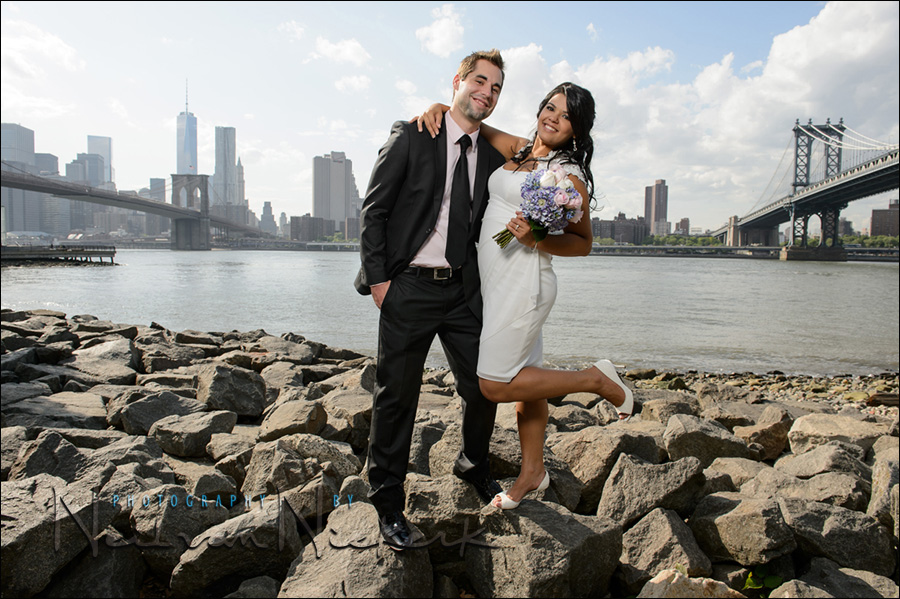
Advantages of a higher max flash-sync speed
A typical scenario we face, photographing people in bright sunlight – we have to add flash to balance them against the much brighter background. The thought-process or algorithm in deciding on camera settings, is carefully explained in this article: Controlling bright daylight w/ direct off-camera flash. What max flash sync speed is, and why understanding the impact of max flash sync speed is on balancing flash with ambient, is explained in that tutorial: Max flash sync speed.
Now that we have all that under our knee, the question might still remain – what are the advantages of a camera having a higher max-flash sync speed … compared to a camera with a lower max flash-sync speed, but with a lower ISO range.
Let’s consider two of the popular DSLR models that came out years ago, and helped make digital photography accessible to us – the Nikon D70 and the Canon 10D.
The Nikon D70 has a maximum flash sync speed of 1/500th, but only went down to 200 ISO. The Canon 10D has a maximum flash sync speed of 1/250th, but went down to 100 ISO. There were huge debates on the photography forums at the time, on whether the D70 had the advantage or not, since many argued that 1/500th @ 200 ISO is the same as 1/250th @ 100 ISO.
A quick bit of math comparing just the numbers, make it look like the two cameras are equals in terms of how you can balance flash with ambient light – but that’s too simplistic an explanation, and an entirely wrong way of considering this.
So here it is – the advantage of your camera having a higher max flash sync speed …
Let’s work through an example of camera settings
If the Nikon D70 boasts a higher maximum flash sync speed of 1/500th, but only has a minimum of 200 ISO … as opposed to the Canon 10D offering a lower max sync speed of 1/250th, but with 100 ISO as its base ISO … then it might seem that 1/500 @ 200 ISO = 1/250 @ 100 ISO.
It would be that simple if we were only regarding available light. But we’re bringing flash into this equation. So while a change in ISO affects both ambient light and flash exposure, shutter speed only affects available light. And that is where the difference comes in.
Let’s assume a certain combination of settings for ambient exposure:
1/250 @ 100 ISO @ f/5.6 (for the 10D), which is the same as:
1/500 @ 200 ISO @ f/5.6 (for the D70)
But let’s change the 10D settings to:
1/250th @ 200 ISO @ f/8 … which is still the same ambient exposure, compared to:
1/500th @ 200 ISO @ f/5.6
But now, when we add flash, we need to add f/8 worth of flash to the scene for the 10D, as opposed to only f/5.6 worth of flash for the D70. So our flashguns have an easier time with the higher maximum flash sync speed in situations where we are shooting in bright light conditions.
Just to be sure, let’s run through the explanation again
Let’s say we have light outside that gives you 1/250th @ f5.6 (100 ISO), for the background.
(ie, 1/250th @ f/8 for 200 ISO)
And let’s say our flash’s guide number tells us that, for the distance we are standing away from them,
(ie flash to subject distance), is such that we can squeeze f/4 maximum out of it at 100 ISO.
So now we have a flash that can only give us (at this distance),
f/4 (100 ISO) = f/5.6 (200 ISO) = f/8 (400 ISO)
So the photographer with 1/250th flash sync, can get
f/5.6 ambient, but only f4/ for flash, (100 ISO), or ..
f/8 ambient, but only f/5.6 for flash, (200 ISO).
It is important to notice here that the photographer with a max flash sync of 1/250th in this example, will always be one stop under for his flash exposure compared to the ambient light.
Or seen in another way, his background here will be one stop over-exposed compared to his flash exposures. It’s also very important to note that raising ISO up or down does nothing in terms of balancing flash with ambient .. simply because raising the ISO or lowering the ISO, affects ambient exposure and flash exposure equally.
Now, on the other hand, the proud owner of the D70 with 1/500th max flash sync, just bumps his shutter speed to 1/500th of a sec. His ambient light becomes .. 1/500th @ f/4 (100 ISO).
Aaah, but you say he is limited to 200 ISO ?? Not an issue ..
this becomes .. 1/500th @ f/5.6 for ambient exposure in this example, for 200 ISO.
And our flash in this example, can give us … f/5.6 at 200 ISO.
Tadaaaaa .. in this instance we can perfectly balance flash with ambient ..
because we could raise our flash sync speed. ISO had nothing to do with it.
So someone who has only 1/125th top flash sync (like on the Fuji S2), has a very real (2 stop) disadvantage compared to the 1/500th flash sync speed like that found on the Nikon D70.
Camera settings & photo gear (or equivalents) used
- 1/250 @ f/8 @ 100 ISO
- Nikon D4
- Nikon 24-70mm f2.8G AF-S /equivalent Canon 24-70mm f/2.8L II
- Lastolite EZYBOX 24″×24″ softbox
- Nikon SB-910 Speedlight controlled by PocketWizard FlexTT5 Transceiver & AC3 Controller
or alternately, the Canon 600EX-RT Speedlite controlled by Canon ST-E3 Transmitter
Related articles
- Controlling bright daylight w/ direct off-camera flash (model: Molly)
- tutorial: Max flash sync speed
- tutorial: High-speed flash sync
- When to use high-speed flash sync / Auto FP (model: Aleona)
- How to overpower bright sunlight with on-camera flash
- Manual flash vs. TTL flash
“Similarly, the Canon 1D mkIII and mkIV bodies have a max flash sync speed of 1/300” — for completeness: the Nikon D300 and D700 (and perhaps other pro Nikons) also have a max sync of 1/320.
Hugo Vincent,
If you set the flash sync speed on the D300 and D700 to 1/320, your usable flash range is diminished by almost half. I talked to Neil about this in an earlier post on D300 settings: https://neilvn.com/tangents/nikon-d300-custom-settings/
The flash sync speed that provides the longest flash range for the two cameras is 1/250, which is currently what most Nikon models support.
Hi, Can you explain why with my pop up flash the flash sync speed is 1/320, but when I use my sb800 it becomes irrelevent. I found this out the other day when I was exposing for the background and got a shutter speed of 1/1000. I then popped the pop up flash up and it dropped to 1/320. I was in manual mode. Consequently the background was over exposed.
Thanks,
Nick
Nick, what you’re seeing there is that you can go into high-speed-sync mode with your SB-800.
However, the max flash sync speed on your camera still remains 1/320 (or 1/250)
Go through this article on maximum flash sync speed for more on this.
Hi Neil, Yes I see what you mean now. As I would be using the flash for fill-in, the loss in flash power would not be that bad as I would only need a blip of flash to light the subject. Thanks
Nick
Hello Neil
iam a Nikon Shooter and got a Question Iam out on a Sunny day and want to use the Wide open Aperture (2.8 or 4) to Get a Shallow Depth of field without blowing out the Background. Shuld i keep my flash outpower to -1.5 to -1.7 TTL BL and switch to Auto FP(1/250 or 1/300) Hope you can help me.
Thanks
Anoop
Anoop, however you decide to balance your settings, the combination of settings (shutter speed / ISO / aperture) has to be such that you don’t over-expose the ambient light for your subject.
In other words, you can’t both have a wide aperture AND a medium shutter speed (such as 1/250) on a sunny day. (Unless you use an ND filter.)
So to use a wide aperture, you have to go to a higher shutter speed. Simple.
But your flash does become less efficient. Whether this important though, will depend on what you’re actually trying to achieve with flash … and the specifics of the scenario you are photographing.
I also can’t give you specific advice about the flash exposure compensation, since this too will depend on what you’re trying to achieve, or the specific scenario you are photographing.
The 5D Mark II has a rated max flash sync speed of 1/200. In actuality there is a faint black line. If you want a full-sensor crisp picture, you need to drop it to 1/160. This happens on my camera, and on several other people’s who have 5DII cameras. Others have reported no problems.
Many photographers have found out the hard way not to shoot at max sync speed in the studio because of exactly that problem. You can see the edge of the one curtain.
The problem arises because of propagation delay. What happens with some triggers, is that by the time your camera trips the radio trigger, which in turn fires another radio trigger, which trips the lighting .. there is a small delay. This can become significant.
It varies from setup to setup.
I have the same problem with the Nikon D3 under certain situations, where I can’t use 1/250 because of that. I have to shoot at 1/200 or lower.
Neil vN
Yes indeed, I have been one of those photographers that found out the hard way, that shooting max sync speed in the studio leaves me with a dark edge on the image. It took me a while to have the “Eureka moment” with this as I didn’t really know what the problem was at first – after all, I was doing everything right! But when I did figure it out, I was kicking myself – the solution was so simple – just use a lower shutter speed!
No doubt most readers know this already but what they may not realise (and hence the reason for my response here) is that this problem does not occur if one fires the studio flash using a speedlite (dialled down to min. power) instead of a radio trigger, then shooting at max sync speed works fine. Personally, I prefer to use a radio trigger and live with the lower shutter speed as it makes for easier handling on account of the lighter weight on the hotshoe. But it’s nice to know there’s a way to get max sync speed while still triggering remotely.
– Thorsten.
“So the photographer with 1/250th flash sync, can get
f5.6 ambient, but only f4 for flash, (100 ISO), or ..
f8 ambient, but only f5.6 for flash, (200 ISO).
It is important to notice here that the photographer with a max flash sync of 1/250th in this example, will always be one stop under for his flash exposure compared to the ambient light”
I don’t get this Neil, f4 is larger than f5.6 not clear why it’s one stop under ?.
John
John … in the scenario described to illustrate the difference that a higher sync speed will make, we have the distance such that we need f4 for correct flash exposure.
ie, if we shoot at f5.6 (that we need for correct ambient exposure here), we will have flash at 1 stop under ambient exposure when we use f5.6
Neil vN
Hi Neil, if I want to shoot outdoor and I need higher flash sync, should I set my D300 to AUTO 320 FP instead the default ?
And if so, then I should be able to use up to 1/8000 if I need to right. I am not saying that I will use that much of a speed but what I am saying is that technically, I am able to use all the speed that I want right ?
But more important than that is this question Neil : what is the relation between ISO and Aperture ? If you have for example 1/500 of speed and you want to remain shooting at that speed, then you only have Aperture and ISO to balance out. How do you do it ? If you bring the Aperture to f/4, why you should raise the ISO ? My understanding is that ISO is in charge to collect the light to make a picture and the more ISO, the brighter the scene, so if you choose a small aperture like f/4, f/2.8, why you must bump the ISO to 400 or 800 sometimes ? Can you explain the math there please ?
Maurice, you could go to higher shutter speeds with HSS mode / Auto FP mode … but you do lose about 2 stops of power from your flash in comparison to staying at or below max sync speed.
The difference in range, as you change between 1/250 or 1/320 Auto FP, is marginal. Just stay with 1/250th for simplicity.
As for the relationship between ISO and Aperture … that explanation is beyond the scope of what I intend for this site … or have the time for. You are far better off with a solid book that will explain this too you thoroughly and clearly. My suggestion is Bryan Peterson’s book – Understanding Exposure, 3rd Edition: How to Shoot Great Photographs with Any Camera.
That bright glow you see coming from the East Coast is the light bulb going off over my head. You’ve mentioned more than a few times your preference for shooting on-camera flash @ your cameras max sync speed and I now I finally get the concept after reading the above article.
Perhaps I’m on a roll and the intricacies of General Relativity will come into sharp focus next (Check out Lawrence’s Karauss’s A Universe from Nothing)
Here’s hoping!
Rob