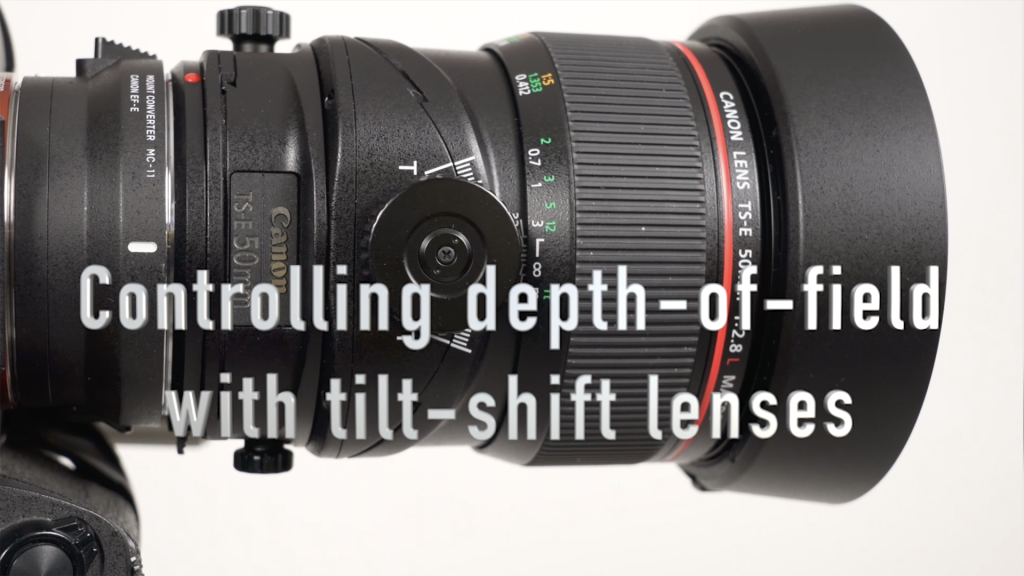
Using tilt-shift lenses for greater depth-of-field
When you can't get enough depth-of-field (DoF) with a small aperture, and your subject is more or less on a single plane, (ie, 2D), and focus stacking isn't entirely feasible, then using a Tilt-Shit lens to control your depth-of-field .might be the solution. This video will show you how that work.
In this video, I used the Canon 50mm f/2.8 tilt-shift lens (B&H /Amazon) on a Sony A7RivA via a Sigma MC-11 adapter. In the video I also discuss the limitations of using a small aperture for maximum depth-of-field. Read more inside...
creating a background with narrow depth-of-field & great bokeh
Shooting images for the review of the Nikon 85mm f1.4G AF-S lens, it struck me how truly superb this lens is. It improves on the legendary Nikon 85mm f1.4 AF-D lens in some key areas. (For me the updated lens was an immediate upgrade.)
But ultimately, you could get similarly beautiful images with any short portrait lens that gives you a very narrow depth-of-field AND has great bokeh. (Just to reinforce that again .. narrow DoF and bokeh are not the same thing. But I digress.) So, whether you're shooting with a Read more inside...