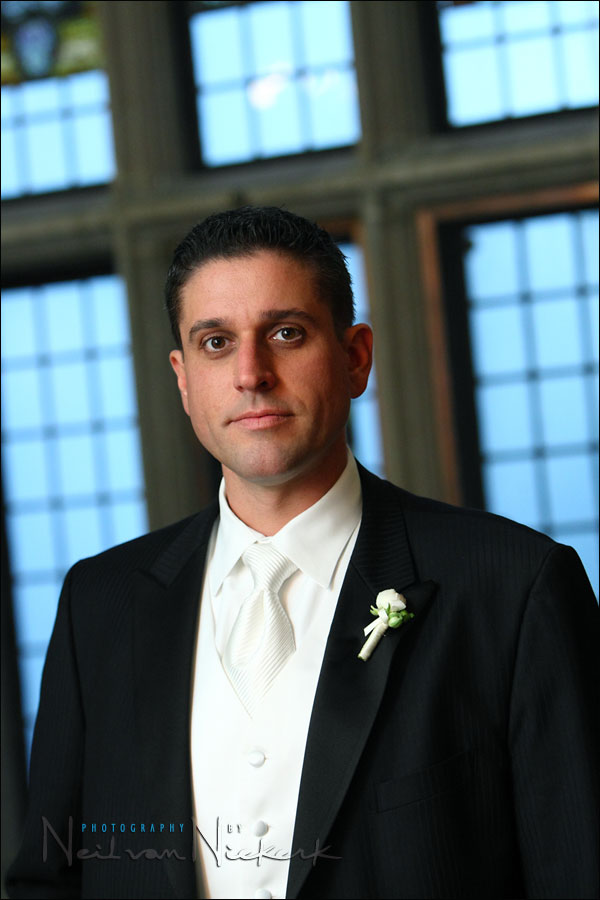
Ambient exposure with TTL flash
A question I was asked about exposure metering in relation to flash:
Let’s say I use Manual mode on my camera, and have adjust my aperture and shutter speed so that my meter indicator have returned to zero. At this point I know at least i have “correct exposure”. I would either choose to over expose and under expose depend on circumstances.
My question is, will my picture get over exposed if fire my strobe even thought my indicator already point to zero ? I have no idea how should I integrate flash setting into my routine I always use when in M mode. I did not see u mentioning about the exposure indicator in your blog.
This is a tough one to give a definitive answer to. Firstly, simply dialing your camera’s meter to zero doesn’t necessarily mean your exposure is correct. This article on exposure metering will explain some of this. Sometimes your camera’s meter need to show over, or sometimes under, for you to have correct exposure. The essential concept here is that you need to expose for your subject, or a specific part of your scene.
One of the instances where just zeroing your camera’s meter would very likely not give you correct exposure, would be with a strongly back-lit scene. What makes it even more difficult is that the camera’s meter could then show you different settings depending on your composition. If you zoom in and out or shoot vertically or horizontally, your camera’s meter will tell you different things.
So let’s look at the photo at the top as an example and see where it leads us …
This near-candid portrait of the groom will give some insight into the thought process. But, do keep in mind that this would be but one example out of many possibilities we can encounter. We need to be flexible.
- 1/200th @ f3.2 @ 800 ISO … flash exposure comp +1.3 EV
- Canon 1D mk3, Canon 70-200mm f2.8 IS
The immediate question about the camera settings might be about how I arrived at them. It was a quick portrait as I walked past where the groom was talking to guests. I saw the evening light on the windows, and then asked him to stand there. I bounced flash off the wall way behind me. You can see by the way that the light falls on the groom’s face, that the bounced flash was soft and directional. As always, when I work indoors, I try and make on-camera flash look like studio lighting.
Back to the camera settings. I got my initial exposure settings by checking my camera’s metering display, and then doing a test shot of the windows. I made sure I was at an aperture and ISO setting where I’d be fairly successful in bouncing flash behind me into a very large room. The FEC was cranked high because I knew that back-lighting tends to heavily influence the Canon’s TTL flash metering.
Now, without flash, he’d be completely silhouetted. No detail at all. So I had to add flash. But instead of setting up an off-camera flash with a softbox, I used my on-camera speedlight for the same effect. And this resulting image is very much the specific effect I wanted to achieve with this straight-forward portrait.
So back to the question. Will adding flash over-expose my subject if my camera’s meter is zeroed ? Not necessarily, as you can see in this example. What my camera’s meter was showing while it was pointed at the back-lit subject, I have no idea. It’s largely a trivial thing for me to even notice then. And the reason for this is that I already have good exposure for the background, and this I determined before composing the portrait. That’s as far as I care about what my camera’s meter says. And then TTL flash took care of the rest.
Two things helped me here in working fast – the background would look good with a fairly wide range in exposure. It wasn’t critical. Not like skin tones would be. And what also helped, is that I shot in RAW. That gives me a lot of flexibility in post.
I hope that with this explanation, a few things might click into place already. Go through the linked articles for more explanations of this topic.
Related articles
- Metering for TTL flash and ambient light
- Flash exposure compensation
- Bouncing flash
- Tutorial: Bounce flash photography
- Improve your portrait photography: Lighting with bounce flash
- More articles on wedding photography
So you are actually saying: make sure the background has the correct exposure (being over- or under exposed according to the lightmeter is not relevant) and then flash the subject without watching the meter again? That might be a bit more difficult if the subject isn’t a moveable object/person though.
So the bottom line is in spite of all the advances in technology TTL flash metering does not really work, especially with bounced light…
You know all these articles have really helped me come to grips with my on camera flash work. I look forward to more of them.
Excellent write-up.
Here we have the case that the foreground is darker than the background and with the flash we kind of bring the subject to the same level of the background (or something more or less depending on our wishes).
But what about when the subject and the background are evenly lit? Assuming correct exposure for the subject and background (which is the same in this case, without flash) – does the additional flash then overexpose the subject?
Is the right side of the face light by ambient or is the flash reflecting off another wall?
In short I read this:
– use normal metering for background or ambient light
– use TTL flash for the subject, with compensation for influence of background/ambient light on TTL metering
My conclusion:
– flash does not influence the background/ambient light
– but, background/ambient light may influence TTL metering
I have discovered that the best way to “get” this is to practice this.
It is so difficult to put out a definitve solution and anticipated result considering all the variables that may be involved.
When I began I used Neils settings often as a starting point and then went from there, just to get me started, but the more you use the techniques the better you understand how your settings need to be adjusted to work within the variables of each location.
If you shoot in RAW then chances are that if yoy have fallen short of the mark the image will be able to be corrected enough to look great, as the above portrait does.
Practice, practice, practice – it works, I know!!!
Neil .. Thank you for the comment. I think I got the idea now and can practice further and further, like Rachel suggested ;-)
Neil, why did you choose a +1.3 ev flash exposure comp. Why not a +0.5 (under-expose metering for the subject) ?
Neil,
Martin said;
“But what about when the subject and the background are evenly lit? Assuming correct exposure for the subject and background (which is the same in this case, without flash) – does the additional flash then overexpose the subject?”
you answered;
“Martin … if you’re already exposing correctly for the ambient light in the scenario you describe, then you will over-expose if you add flash as if the flash is the main source of light. However, if you more realistically just use flash as fill light in that instance, then the flash will just lift shadow detail and help the contrast, and not add significantly to the overall exposure.”
It’s my understanding that unless you have specifically disabled auto fill flash reduction in the custom functions then any ambient reading of EV13 of brighter will result in the ETTL system reducing the power output by 2 stops to provide fill only (thus not overexposing the scene). Any ambient reading or EV10 and lower the system will deliver fully illuminate the subject. There is an un-documented (non linear it seems) ramp down between EV10 and EV13.
Is this correct or is my research bogus? I’ve been working with that in mind and it does seem to be the truth? I’d be interested in your thoughts.
Thanks for all your articles, great reading.
Kind regards
DWBell
I took a private workshop with Neil last year. He was able to clear this topic in couple of minutes since he was explaining while we were taking pictures of the same scenario. Thank you Neil !!!
Hi Neil,
You stated this in the blog: “I got my initial exposure settings by checking my camera’s metering display, and then doing a test shot of the windows”
What did you meter off of? Based on your lessons and blog, I would have metered off the groom’s white shirt, recomposed the photo so the groom and the windows are in the photo, and then think to myself:
“Neil said that within a certain range, ISO and shutter speed don’t have a great effect on the photograph’s exposure when TTL flash is used.” With that in mind, I probably would have chosen a wide aperture to make sure the windows in the background would be better lit. (i.e. your posts on “dragging the shutter”)
Neil:
Thank you for your great explanations. I have got a lot of good info from you blogs.
I shoot with a Nikon and find that I can’t always trust the image on the back of the camera to give me reliable info on the exposure. This is especially tough outdoors in bright light. I use the histogram to attempt to avoid burning out the highlites but to get the required exposure for the subject in your 1st example might be challenging. Can you offer any better insight into chimping techniques?
Thank you.
Neil,
I would never suggest that behind this blog, you were, in fact, naked!
Kind regards
Duncan
Hi Neil
Great blog. Thanks for tons of useful info.
One question – i read somewhere that TTL flash meters off the center of sensor. So if your subject is towards the edge of the image (left or right , and not in center), the TTL flash might be metering off something away in the background. Do you use Flash Exposure lock (I think it is called FV lock for Nikon), to lock the flash exposure while subject is in center , and then recompose the shot ?
Thanks.
-MP
You used FEV +1.3
But the pic was 1/2 stop underexposed:
1) does flash metering also use the same stuff as ambient metering? ie if using evaluative, flash will see the bg and dial down, whereas spot may not do so as much?
2) since the flash was /probably/ at full blast, would that mean changing FEV from 0 to +2 wouldn’t have done anything?
3) in this case, only ISO can make the fg brighter?
Neil,
Please don’t demote me back to bounced flash 100 but doesn’t the TTL try to be smart and give amount of light it thinks it needs for correct exposure. That said if you’re having the bounce off a far wall or ceiling, that’s the reason you bump up the flash comp….?
I did go back and reread flash and ambient before posting this ;-)
It was amazing to look at your beautiful sample shots again!!
-Harry
Some stuff I don’t understand about TTL. TTL flash metering should give you correct exposure unless its power is maxed out.
So why is it for indoor shots I often have to turn FEV up/down?
And I did an outdoor shot 1m from severely backlit subjects, and had to turn FEV way down too?
It seems true whether I’m in M or Av mode.
The original question was my question as well… so it’s great to see this discussed. I’m just starting out with external flash, and I’m really glad I found this blog.
Hi Neil – Thank for your this website – I have really learned a lot by reading your techniques.
For bright backgrounds and darker foreground (subject), your general technique appears to be:
1 – With cam on spot meter adjust your manual f, shutter and ISO to get the level of detail required in the background – take a test shot and confirm with LCD and blinking highlights and/or histogram.
2 – Once you have correct exposure for background with cam settings you would then use flash to expose the subject (which would otherwise be underexposed). Typically you would use bounce flash to create a more natural light and use TTL to send the general appropriate amount of light – then using FEC to fine tune.
Question 1:
Do you shoot the test shot of the background without flash turned on? You give this impression in your last post with the picture. Wouldn’t you need to take into account what the flash will do to the background exposure when setting up your camera?
Question 2:
How do you ensure TTL meters off of the correct point when actually shooting your composed shot. Say the foreground object is off to the right in the picture (with the rest of the frame filled with background light). Will TTL meter off of my spot meter (if thats what my cam is set to); or does TTL have its own metering system?
If its evaluative of the whole scene, would you just knock up the FEC to compensate for all of the background light?
Cheers!
Sorry one more thing – what metering mode do you typically find works best for your technique?
From what I’ve learned in your wonderful site is first to meter for ambient, in this case the glass window behind. Would it work if I used a grey card (or spot metering on the window frame which looks medium toned) and then move into position and take the shot? That would give a perfectly metered window structure and a subject (lit by flash). I have also read that underexposing the background by 1-2 stops would also retain enough detail in order to avoid subject overexposure (or keep the subject in a shadow area). The main point being to use a grey card near the window frame to get the starting exposure point.
Thanks,
Ellery
Can I assume from your lesson, that as long as the background is exposed to what you desire, the camera will “take care” of the rest when the bounced flash hits the subject? It seems your main concern is the background, yet your skintone of the groom are great and even his black jacket has beautiful detail.
Also, do you know if you were using center-weighted, matrix or spot metering? Is it more ideal to use matrix when using TTL? I assume spot metering would almost “confuse” the camera/flash?
I’m extremely comfortable with available light photography and always using the zone system. However, seems like the zone system goes out the window when it comes to Speedlite flash photography.
Normally, I would have “zoned” for the background window light (on the picture with the groom) to get good exposure, setting the meter to probably +1.5 on spot. But, I don’t sense you “zone” for the background’s exposure. You said “I got my initial exposure settings by checking my camera’s metering display”. If your camera was already set to ISO 800 and f3.2, then you dial your meter based on what? I assume you are not in spot metering?
Neil,
Thanks for your detailed response.
Question.. and pardon if this is Basic101, but… Since I have been using Zone, I would simply spot meter anything in my frame and set my exposure to exactly what I want. It has been fail-safe for me… but I want to expand beyond that.
Thus, if using matrix or center-weight, and if the background is brighter than the subject, how would you set your exposure to give near correct exposure for the background? Would you zoom into just the background and set your exposure so the only subject in the frame would be the ambient background so matrix doesn’t meter anything else? What if you have a fixed lens?
one other question… in reference to the most adorable bw candid of the kids above. You said you “used the Black Foamie Thing ™ to flag my flash and not hit people behind me in the face with a strong burst of flash.
I thought you use the Black Foamie Thing with the longest part closest to the subject so not to spill light onto them but rather have bounced light be the only light hitting the subject? Thus, you would have hit the people behind you with the strong burst of light, no?
Hi Neil:
First I would like to thank you for educating us with flash photography. Your blog is very useful for me. I would like to get suggestion from you what to do with the following situation.
my family and I was in a beach city at night. The background was dark , and so was my subject (my family). I would like to get both my subject exposed properly and at the same time it showed the city light and the building on the background. My subject is about 3-4 feet away from me, and there is no light around me. The beach was behind me and the city was behind my subject
I am using wide angle lens, with evaluative matrix metering, and flash. I use high ISO 1000, M mode, 1/45 and 1/60 speed,
I metered the whole field seen on view finder, and use flash compensation EV -2, and what I got was TERRIBLE over exposed subjects. with sort of OK background
What do you do in this situation?. If I did not use Flash my subject face is not exposed properly either (darkish ugly face)
Thanks
Hi Neil:
Thank you for responding
Yes I was using direct Flash to the subject. I have no choice, I have nothing to bounce the light. I was at broadwalk, where the beach was behind me, and there are open space to my left and right. My subject is in front of me about 3 meter away, and the city light was behind the subject
I try to practice what you thought us, using M mode, metering the ambient city light with ISO 1000 and I got F 3.5 and speed 1/15 th, so it was pretty dark. I under exposed the ambient light by setting the speed to 1/30. and keep apature the same
I use my flash (guide number=54) on TTL, directed straight to subject with FEC -2 and -2.5, and I got way overexposed subject, with sort of OK city iight.
I did not check my speedlight minimum distance.
I am now confused as to what guide/ method do I use to shoot M mode at night. in open space such as park, beach, large field etc.
Would you shoot in Tv or Av (speed or apature priority) in this setting?
If you still use M mode, what your guide to set your speed and apature? ( I know your iso should be at least 1000-1600) + your flash
I am looking forward to hearing what you would do?
Thanks again
Roy
Neil
Oh..After searching for advice on Flash Photography on the internet for I don’t know how many weeks..I feel I have found the holy grail of Flash Photography information and more!
Bless you 1000 and 1 times for your posts and site. How generous you are with your knowledge!
Thank you!
Joy
Hi Neil,
I’d be very interested to learn more about how you decide the angle to give to your speedlight. I’ve searched about this on your blog but never have found any useful information about this (you generally say “I bounced it behind me and to the left”, but what angle?, why?, …). I know of course about angle of incidence and angle of reflection, but when you shoot, do you precisely analyse your environment and decide the angle your speedlight will have or is this more about “feeling”?
Thanks for your help and once again, thanks for the great info you share with all of us.
Ed
Can’t wait to read/see it… :o)
Many thanks
Ed
“And the reason for this is, I already have good exposure for the background, and this I determined before composing the portrait. That’s as far as I care about what my camera’s meter says. And then TTL flash took care of the rest.”
Neil – this is exactly my problem with photography – how did you determine “good exposure” (if you don’t care about the camera’s meter)? Experience? What is your line of thought when determining “good exposure”?
Would so appreciate an explanation.
Many thanks
This is a rare ahaaaa moment for me, thanks Neil.
Hi Neil,
I’ve had a few issues recently with TTL on my flash. I’m fine when it comes to bouncing, but occasionally I’ve had to use direct flash, either to overpower harsh sunlight outdoors or in an outdoor evening portrait scenario. I exposed the shutter/aperture/iso for ambient light, or slightly under, and then I dialed down the FEC on my speedlight as it was direct and I didn’t want to overexpose the face.
However, regardless of what I do to the flash FEC, it comes out dazzling bright and blows out the subject’s face. Even when I set it to -3 on the flashgun, I’ve noticed when it fires, my flash kind of automatically changes the number whilst it’s firing, and then returns to show -3. I don’t know if this means I’ve done something wrong in the settings or if my batteries are too strong. I am quite close to the subject sometimes but these were in scenarios where I didn’t have room to move back. Is it possible I’ve been close than a sort of minimum distance so the flash will always be too bright?
I’ve managed to get it so the background looks fine, but there flash is notable on the subject, or when I try to increase shutterspeed/close aperture on camera to try and reduce the brightness on subject’s face (because I’m already at -3 which is my SB-800’s limit) that just results in the ‘cave effect’ and the subject is still overexposed.
Do you have any ideas about what could be going wrong?
Thanks
Errrm, I can’t remember to be honest, but I know with flash on I’m usually around 1/250-1/160 depending on my aperture/iso/the situation, because of the max sync speed. I usually meter for the ambient light/a bit under. Do you think it’s because when my flash goes on it cuts me to 1/250? I have found even after putting flash on, and having the settings 1/250 combined with iso and aperture so the backgrounds not blown out, and then changing only FEC, it is just too bright with every shot, so I don’t think it’s the change in max sync.
I once stood next to another photographer and we were both shooting nightclub/gig crowd. He was using TTL direct flash, and he had the nice dark but showing background with well flashed subjects. With mine, the background looked fine but the people’s faces were pretty much all bright white.
Sorry I know that’s not given you any more info, but if you suggest your idea, it might occur to me how I might have made my mistake!
Thanks x
Marianne,
I think you have the flash sync speed in your camera’s menu set to a specific value; to say 1/60th, and the moment you turn on the flash, it will automatically go to 1/60th hence the blowing out. Look in the menu for Flash Sync Speed and choose 250th Auto if it has it.
I am on a D3s and I chose the “1/250s (Auto FP)” for my permanent setting which means when I turn the flash on it will auto follow my settings, regardless of my shutter speed, even into the high speed sync range. [Above 250th]
I presume [cannot speak for Neil] that is the reason why Neil asked what do your settings say when you turn on the flash and turn it off. Test it, set your shutter to say 250th, [manual mode] turn on flash, see what the shutter speed goes to.
Even in manual mode on camera, if your Flash Sync speed is set to say 1/60th in the camera’s menu, no matter what you set the shutter speed to, it will automatically revert to whatever you have the Sync Speed set at, ie: 1/60th, when you turn on the flash.
I just tested on mine, and it will revert my manual shutter speed to the 1/60th I temporarily enabled it to instead of the 250th Auto.
Trev.
I also have another thought with the Nikon, if in manual mode, you can also compensate flash by using the normal exposure mode, which won’t show up in the LCD on camera unless you actually look via the compensation button, you may have also changed that sometime, since Exposure Compensation on the camera does NOT affect ambient exposure when in manual mode, but WILL affect flash.
Check that also, you may have it set to +2-3 even, cancelling the -3 on your flash itself.
Trev.
When I said: I also have another thought with the Nikon, if in manual mode, you can also compensate flash by using the normal exposure mode, which . . .
I did mean the “. . . using the normal exposure compensation mode . . .” of course. :)
Hi Trev,
Thanks for your helpful suggestions, I checked my flash settings and I am limited to 1/250 (rather than high sync) but I have still had the flash problems when my ambient light was metered to within 1/250, i.e. when I knew the shutter speed would stay fixed at that.
However, I think you may be onto something there with the compensation on camera body affecting the flash, I reckon I may have pressed one too many buttons and wiggled one too many dials! I have just had a test of this function and it is affecting my flash as you say it does.
One remaining mystery is what I’ve noticed before is on the actual SB-800 display, when the flash fires, it changes the FEC number i.e. I’ll set it to -3, pop the flash it blinks +2, and then after firing goes back to displaying -3. When testing the whole camera body compensation thing, this didn’t happen, which still makes me wonder if my flash gun is broken/my batteries are too overpowering?
Marianne,
Then I am afraid I am out of ideas, since I don’t have an SB-800, and maybe Neil can shed more light on the subject, [sorry for the pun] and hopefully help you.
Have you read the flash manual, anything in the flash itself which may allude to changing settings regarding shooting flash TTL and camera manual?
I take it that’s the only flash you have otherwise I am sure you would have tested another one, or borrow another, even an SB900 see if it behaves the same way.
Trev
Oh, did you also do that test with the camera on manual mode with the flash sync speed and the camera’s shutter speed?
ie: Set the flash to anything in Flash Sync Speed on the camera, but set the camera to another number. eg: Set the Flash Sync Speed in your camera’s menu to say 60th, then set the actual camera shutter speed to say 125th, then turn on the flash, and turn off the flash while looking at the LCD on the camera, does the shutter speed you manually set on the camera remain the same when turning on/off the flash?
If it does not, then that is still a problem, it should stay the same since you *want* that ambient light you set manually to be those settings and just a touch of flash.
Trev
I am puzzled why I cannot get Spot metering with D300 and a hot shoe TTL SB-800? (never could)
I set the D300 focus area at Single Point (or Dynamic, I think both ought to work, but neither does work for Spot). I set camera to Spot metering, and the SB-800 shifts from TTL BL to TTL. I set out three letter size cards side by side, black, white, and gray (distance is seven or eight feet, so that each card is about 1/2 height of viewfinder, well larger than a spot). I put the center focus point in middle of each card, and press the shutter on each. All three cards are visible in each frame, but shifted so that black is center of one, and white is center of one, and the other cards just fit.
All three frames look alike, very little difference, but well exposed, for both direct or bounce. It acts like it is metering a much larger area, including all cards. I was thinking with Spot metering, both black and white would become middle gray in their turn, but they don’t, they stay very black or very white in all frames.
Any hints about what I am missing, or how my understanding is wrong, would be appreciated. Thanks
Hi Trev, when I set a sync speed so it’s limited to 1/250, if I had it on higher say 1/640, turning my flash on changes my settings, but I have been aware of this and accounted for this change by doing my ambient light settings with the shutter speed at 1/250. I generally tend to work with that sort of shutter speed or slower so I’m not surprised by the sudden need for flash.
I’m hoping Neil will say what his idea was, as he so tantalisingly alluded as to what he thought might be going on!
Neil,
Quick question…. Does the metering mode that ypour camera is set to affect the way that TTL flash is metered? IE – evaluative vs spot vs CWA? does this setting also change the way that TTL flash is metered?
Regards
Hi Neil,
Thx for all the fantastic info you give out! I’ve been wondering why no one talks about using spot or partial metering with flash exposure lock (I have a 5dm3) to get a good exposure in Ettl. Can you tell me how well this might work? I was especially thinking how it would work out for a wide night shot where I need less than 1/128 (which only happens in Ettl) on a small subject relative to the frame.
thx a lot,
adam
Adam … that would be a more consistent way of working. Good point.