|
April 7, 2011
It’s a great pleasure to present this guest spot by Angie Lazaro – a good friend from way back in South Africa. Angie is a fashion photographer in Cape Town. Angie and I became friends at a time when I was still finding my way as a photographer, doing all kinds of freelance photo shoots … and she was still a photography student at a university in South Africa. We’ve both come a long way from those lunch-time conversations at the Full Stop café in Melville, Johannesburg .. and I doubt either of us could’ve imagined where we’d end up over time.
So I really am thrilled to present Angie now where she describes the setup of two photographs during a recent photo session in Cape Town …
on a photo shoot – decisions, lighting, tweaking, ka-boom!

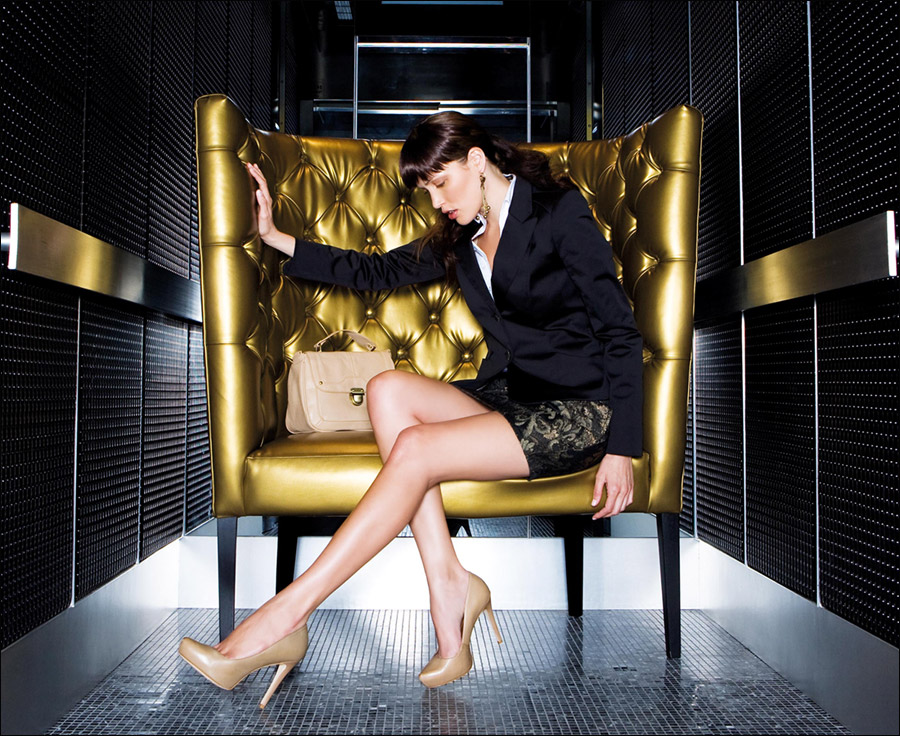
The two photographs shown here are from a series I shot for a magazine fashion editorial (Top Billing Magazine). The location is a new trendy hotel in the heart of Cape Town – the venue suited my needs in that it had great décor interest and enough space to work and move without disturbing the guests too much. The clothing was about using basics, such as the white t-shirt and classic white shirt whilst making it very fashionable in different combinations. During the first shot we realized the model needed a stronger look, the make-up artist added a fringe which suited the style and overall feel we wanted to achieve. A shoot is all about team work …
(more…)
Comments (10)
March 10, 2011
I am super-thrilled to have Frank Doorhof as a guest writer on Tangents. Frank is a highly regarded Fashion photographer based in The Netherlands, whom I had the pleasure of meeting last year. We hung out the one afternoon, photographing a model in Coney Island. What I found particularly interesting, is how our approach to using flash and ambient light differ. Distinct styles and techniques. Quite an inspiring afternoon.
Please note: with this blog post, the images aren’t illustrative of any particular part of the writing, but are there to showcase some of Frank’s work.
And with that, here’s Frank …
on learning the essentials of photography
by Frank Doorhof

I met Neil during my trip to New York where I was going to teach a 3 days workshop. Before the workshops I was having a lot of fun with Neil during an impromptu photo-shoot that was arranged by a mutual friend of ours – thank you Richard! – and found Neil to be a lot of fun although he did scare the living you know what out of me when he stopped his car in the middle of the road to remove a piece of paper from the windshield, however I though he was getting out of the car to get into a fight with a very obnoxious driver behind us…. Yeah Neil I still wake up at night screaming about that one!
When I was asked to write a guest post for Neil’s blog, I was thinking very hard about the subject. Neil already has some nice tips and articles on lighting online so adding to that would be just adding something that’s probably already there, so I decided to do it little bit differently …
(more…)
Comments (8)
February 9, 2011
Albums can be one of the largest profit centers for both wedding and portrait photography, or it can be a logistical nightmare, overloading even the most dedicated photographer. Digital albums can be both a blessing and a curse. We are free to design whatever we or the client wants, but we are also the design studio.
As the first in a series of articles on wedding album design, we have Andrew “Fundy” Funderburg starting us off with some ideas on helping you increase profits and decrease your work load in an ever difficult business climate.
Elegant, profitable wedding albums

© Finao Albums
Clean and Simple Sells
When digital albums first came out, everyone jumped to put as many flurries, borders and backgrounds as we could on the page. It was natural, some of these things were cool, some of them were painful to look at. The end result was simply, we were spending a lot of time designing busy-looking albums.
(more…)
Comments (10)
December 13, 2010
My friend Chuck Arlund is a Fashion Photographer whose elegant photography is something I always admire. Chuck’s previous guest spots here have been well received. His article on simple on-location lighting techniques using a reflector & flash, was especially popular. Therefore I’m really glad that Chuck is graciously sharing with us how he came to shoot this stunning photograph for Parasuco.
Do check out Chuck’s website and blog for more of his stunning photography.
Fashion photo shoot, using multiple lights
Hey there everyone! I have been working with a celebrity stylist and we have shot a few fun projects together. Just for our books. She uses Parasuco a lot for her clients, like Bon Jovi. One of the images we shot was pretty cool of the model wearing some of their jeans. She sent it to them to show what she was doing. They loved it.
A few weeks later the MUA of the original shoot wanted to do some beauty shots. Parasuco had sent some stuff to the stylist for us to shoot and see how it looked. During the beauty shoot we did some shots for Parasuco. After I had processed a few we sent them to the company. They really loved them and ended up purchasing a year license to use this image. It will be a billboard in the airport in Berlin and trade show magazine adverts.

Here is the tutorial explaining the setup for this shot. I used multiple lights …
(more…)
Filed under: flash photography, guest spot, lighting, models, photo shoot, studio photography, style — Tags: fashion shoot, flash photography, lighting setup, multiple lighting setup, studio photography — Neil vN @ 9:03 am
Comments (10)
December 8, 2010

We have a winner for the contest we had last week, where we had to reverse-engineer the lighting in a photograph. I’ll be contacting the winner who will shortly receive a $50 B&H gift voucher. Thank you everyone for vigorously participating!
Here is Josh Lynn to explain what he did for the lighting in the contest image, of which the photo above is the wider shot. This photo reveals more of the one light source. …
(more…)
Comments (12)
September 30, 2010
David A Williams is one of those photographers who influences everyone who meets him. And I mean everyone. On the Digital Wedding Forum, he is one of the few photographer who gets unanimous praise for his workshops. Stating it blandly like that now, doesn’t quite describe the impact David has on the individual photographers who attend his workshop. The impact often extends past the work and art of the photographer, to the point where it can even affect your views on life. I know, it sounds dramatic, but that is as under-stated as I can manage to be about David.
So there it is – I would urge any photographer who wants to learn, to seek out David A Williams’ work and photography and writings, and if possible attend one of his workshops.
Back to this guest post by David: I was really honored when David offered to write the foreword to my book on flash photography. And I am just as thrilled that David has this guest spot on the Tangents blog today.
personal projects & personal photography
Something I’m often nagging on about, are that we as photographers should be doing private projects – something away from the normal work we all do.
This below image has been germinating away within me for years. It’s a photograph in the style of the ‘Glorification’ paintings, stained glass and mosaics popular after the First World War as memorial or evocative pieces.
The image is 30 inches square and printed onto canvas. As the machine gun in the picture was a fully operating model, I could not photograph at the studio without considerable clearances and permissions and guards, so it was made in between racks of clothes at the military supply area.

I blended the clothes using (I think) Dry Brush in PS and used various layers of normal and textured and desaturated to produce the final image and the cross in the background. Lots of the images and sculptures from that period had a certain ethereal them to them.
The frame was built by myself and my framer out of old fencing, topped with rusty wire. The bottom edges of the frame aren’t quite as clean cut as they seem….
The subject in real life is the brother of one of my brides who had the ‘right’ face that I was envisioning – again influenced mainly by the sculptures I had seen from the 1920′s.
(more…)
Comments (9)
September 8, 2010
Chuck Arlund is a Fashion Photographer whose elegant photography is made even more impressive with the simplicity of his set-ups and use of lighting.
Chuck’s previous guest spot here on the topic of on-location lighting techniques using reflector & flash, was very well received. Therefore I’m very happy that Chuck is graciously sharing more of his ideas with this guest post. Also, check out Chuck’s workshops and mentoring sessions.
Inspiration and Homage,
compositing and multiple lights made to look natural
This photograph is from a recent fashion story, and has a couple of elements going on. There is an obvious Americana theme, and in that, there is the homage to Norman Rockwell. Who captured that spirit better than Norman Rockwell?

I’ll just tell the story of how the image came about and then describe the technique behind it …
(more…)
Comments (9)
August 12, 2010
Petra Hall, a pretty awesome wedding photographer in Sweden, first posted this incredible story on the Digital Wedding Forum, and she kindly gave me permission to re-post it here.
the Canon 7D might be rugged, but it isn’t entirely fire-proof …
Petra’s fiance, Erkki, recently bought a new (used) car, just before a planned vacation. They had intended on cruising in the MG convertible and just enjoy the sports car in the summer. They were going to just drive around and take some photographs of the scenery.
The weekend before their vacation started, Erkki was on his way home from work when something in the car exploded and the car caught on fire. Huge flames engulfed the entire car. Erkki’s Canon 7D (with a 24-105L) was inside the car, as well his MacBook Air laptop. Everything went up in flames – the car; the camera & lens and the computer. Luckily no-one was harmed.
Since the car was imported from the UK, the insurance for it hadn’t taken effect yet. Therefore nothing will be replaced that went up in flames.
Here’s how the camera looks like now.
It’s going to hurt.
You might want to look away in case you’re the sensitive type …

A computer techie managed to get the hard-drive safely out of the computer, so Erkki could copy all the images that he’d taken since he got the 7D last winter.
The best part of the story though is that the 7D did keep a secret inside its melted body …
(more…)
Comments (35)
July 27, 2010

My friend, Josh Lynn, just posted this spectacular wedding photograph. It does look like he used flash there, so I thought this would make a another good example to see if we can ‘reverse engineer’ a photograph in terms of his settings and setup.
I first had a guess at how he set this up; and then had a look at the EXIF data, and this revealed the true story. See if you can decipher this image yourself, without scrolling down at first …
Comments (28)
July 11, 2010
I often check the websites of regular followers of the Tangents blog, and I recently noticed some interesting urban landscapes and architectural photos by Tom Kaszuba. What caught my attention about these is that these images were enhanced with high-dynamic range (HDR) processing. HDR images look bold and detailed. Quite distinctive. Sometimes though, HDR processing can appear garish and overly bold. Tom Kaszuba went for a more subtle look – detailed, yet understated. Just beautiful.
I asked Tom to share some of his technique and ideas with us with a guest blog post …
HDR done right

I have always enjoyed HDR or “high dynamic range” photography. Images with a very wide dynamic range can bring scenes to life. The pictures seem to jump off the screen, brimming with a visual flair not seen in “conventional” photography. High dynamic range photos pack a wallop when done right.
While I saw the great potential in HDR I also saw many of these images across the web that looked garish and way overdone. Surreal, cartoonish and overcooked were just some of the things that came to mind when viewing HDR photos. They reminded me of the velvet paintings that were popular in the early 1970′s. Painful on the eyes.
Over time I have picked up bits and pieces from tutorials and articles on the web about HDR editing. HDR processing software was important. In my case I settled on Photomatix software to begin the editing process of the HDR images. While other software exists and Photoshop has it’s own built in HDR rendering tool, my personal preference is Photomatix.

The first thing I do when capturing HDR photographs is to grab the most important ingredient for the successful outcome of a great HDR image. My tripod. Then I make sure I use my remote switch to eliminate camera shake completely. The tripod, remote switch combo are the HDR shooters “must have” tools.
Now comes the actual shooting procedure …
(more…)
Comments (45)
« Newer Posts — Older Posts »
|
|