Flash Photography Techniques
Bounce flash examples ~ Which flashgun? ~ Flash brackets

Which is the best flashgun / speedlight / speedlite ?
One of the most frequent questions I get asked, is what flashgun or speedlight would I recommend – especially to someone wanting to go beyond just using the camera’s built-in flash.
Moving away from the camera’s built-in flash to a larger flashgun opens up an entire world with new possibilities in lighting. Especially so if you are moving up to one one of the camera’ manufacturer’s dedicated speedlights.
I would suggest to go for a larger, more powerful flashgun immediately. The add-ons and gadgets that you find on the market that are supposed to improve the quality of lighting from the camera’s built-in flash, are just ways to grab some of your cash without really offering you an improvement.
To improve your flash photography, you absolutely need to get a larger on-camera speedlight. The question then is, which one?
Each manufacturer offers a variety of options at different price points. I suspect the initial reaction for anyone stepping into the world of flash photography, is to be hesitant about buying a large and expensive speedlight .. and then they err on the side of caution, getting a speedlight that is cheaper, but also limited in specifications and ability.
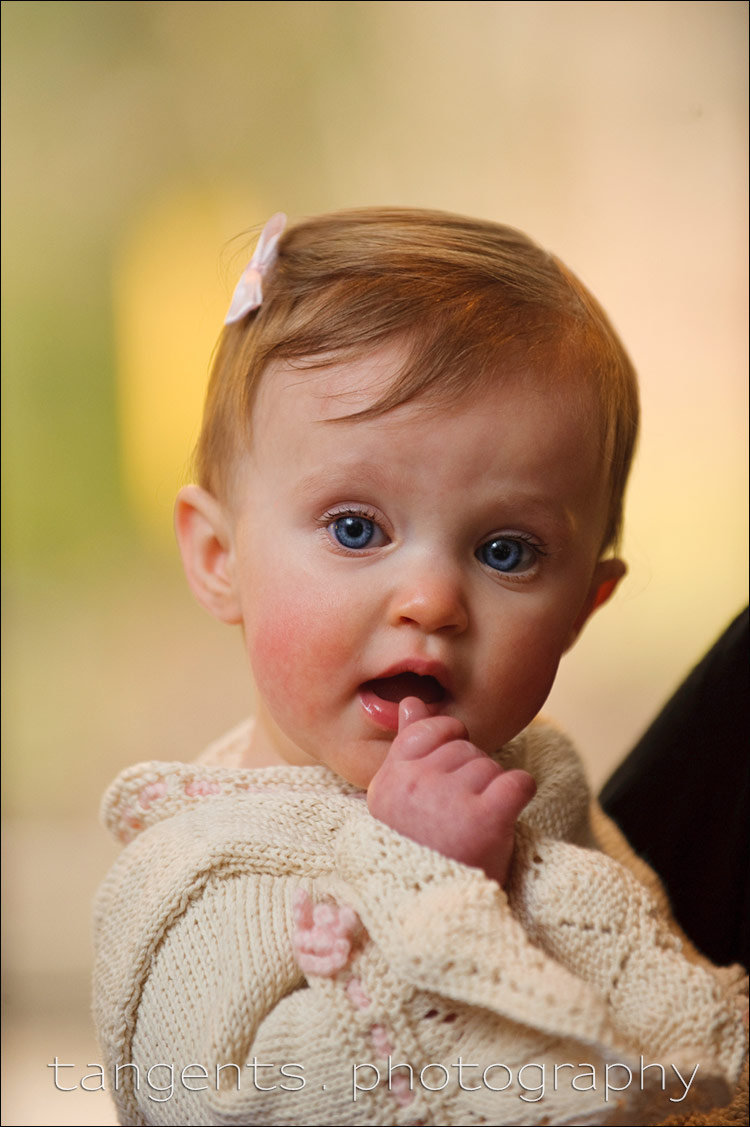
But let’s step away from the equipment for a few minutes, and consider what we want to achieve with flash. So let’s look at that candid portrait of a baby held in her mother’s arms.
To get that specific lighting quality – soft and directional light – you need to bounce your flash. Bouncing your flash gives you a larger light source, and hence softer light.
But it isn’t enough to just simply bounce off the ceiling directly over you. That would give flat light that gives no shape and form and dimension to your subject. If you look at that portrait of the baby girl, you will see that one side of her face has more light than the other.
It is this interplay between light and shade that gives a quality of light that is both interesting, and flattering to our subject. To get there, I had to consider the direction my light needed to come in from, and I wanted to have the light from my flashgun bounce back from the interior of the room to my left-hand side.
In order to do all of this – soft, directional light from my speedlight – it is essential that my flashgun has a head that can both rotate and swivel.
So if you are looking at various speedlights, I would strongly recommend that you dismiss any that don’t allow the flash head to rotate and swivel. Anything less would just limit you, and ultimately be a waste of your money. You’d be better off investing a bit more money in a more flexible speedlight.
Also, in bouncing flash like this, we waste a fair amount of light. It really isn’t an efficient way to use the light. But .. we aren’t after efficiency here. We desire light that is flattering – and then we inevitably come back to those two words – soft and directional. So in bouncing flash, we waste a lot of energy from our flash, and to be able to get enough light onto our subject, we need a strong flashgun.
Therefore my next recommendation would be to get a powerful flashgun – as powerful as you can afford.
I rely heavily on TTL flash technology as you can see on the previous pages and on various other posts on this website. So I would strongly recommend a flashgun that is TTL capable and integrates properly with your camera.
So I would recommend to anyone, even if this is your first foray into buying a speedlight, to get the top-of-the-range that the specific manufacturer offers. Even if it seems overkill and a lot of money in comparison to your camera or a lens, the combination of flexibility and power and integration with your camera system make the larger flashgun the better choice. A smaller, less capable flashgun could very well just end up frustrating you in the limited potential it offers. A full-featured flashgun loaded with mouth-watering specifications could very well make your life easier and your photography more interesting and pleasurable.
Speedlights / flashes that come highly recommended
You have several options, that can be distilled into three choices:
- The name brand flash of whichever camera you use. And again, the best option would be a top-range flashgun with superb specification, whether you use Canon, Nikon, Sony or any of the other brands.
- Profoto – a renowned brand that is known for the superb quality of their gear. This brand is more expensive than most, but you would be buying into an extensive system favored by a majority of studio photographers. This is the system I favor, for good reason.
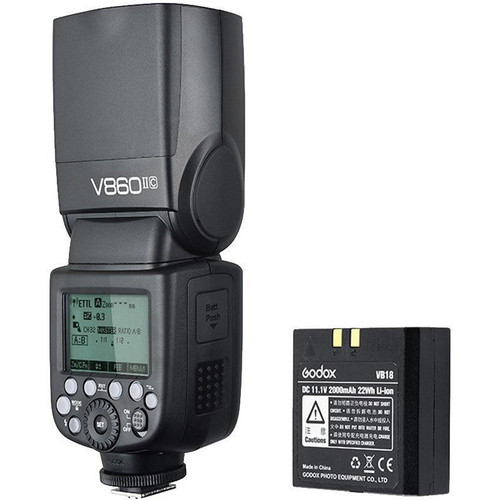
- Godox – a less expensive brand that also gives you the option of radio-controlled off-camera flashes.
Canon speedlites
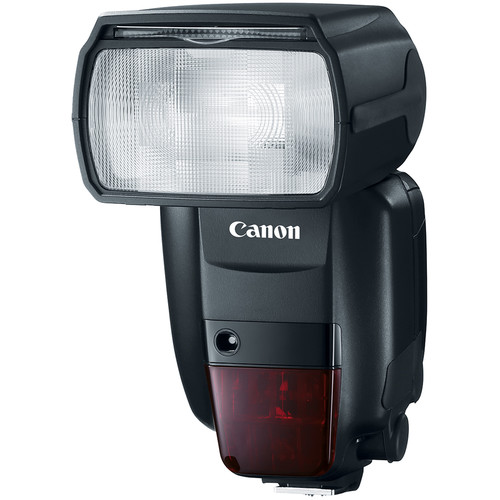
If you have a Canon camera, then your best choice would be the Canon 600EX-RT II Speedlite (B&H / Amazon). This flashgun also rotates 180′ to either side.
What really elevates this is the built-in radio transmitter to give you easy radio-controlled TTL and manual flash from your camera.
Nikon speedlights
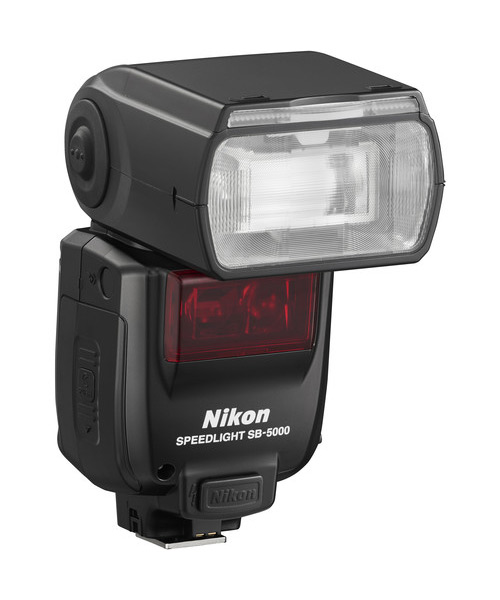
If you have a Nikon camera, then the obvious choice is the Nikon SB-5000 Speedlight (B&H / Amazon). A full-featured powerful flashgun that has a flash-head that rotates 180′ to either side, which makes it very flexible in where you can bounce your light.
For radio-controlled off-camera flash, you would need the WR-R10 Wireless Remote Adapter Set (Amazon), which isn’t quite as elegant as options by other manufacturers.
Profoto flashes
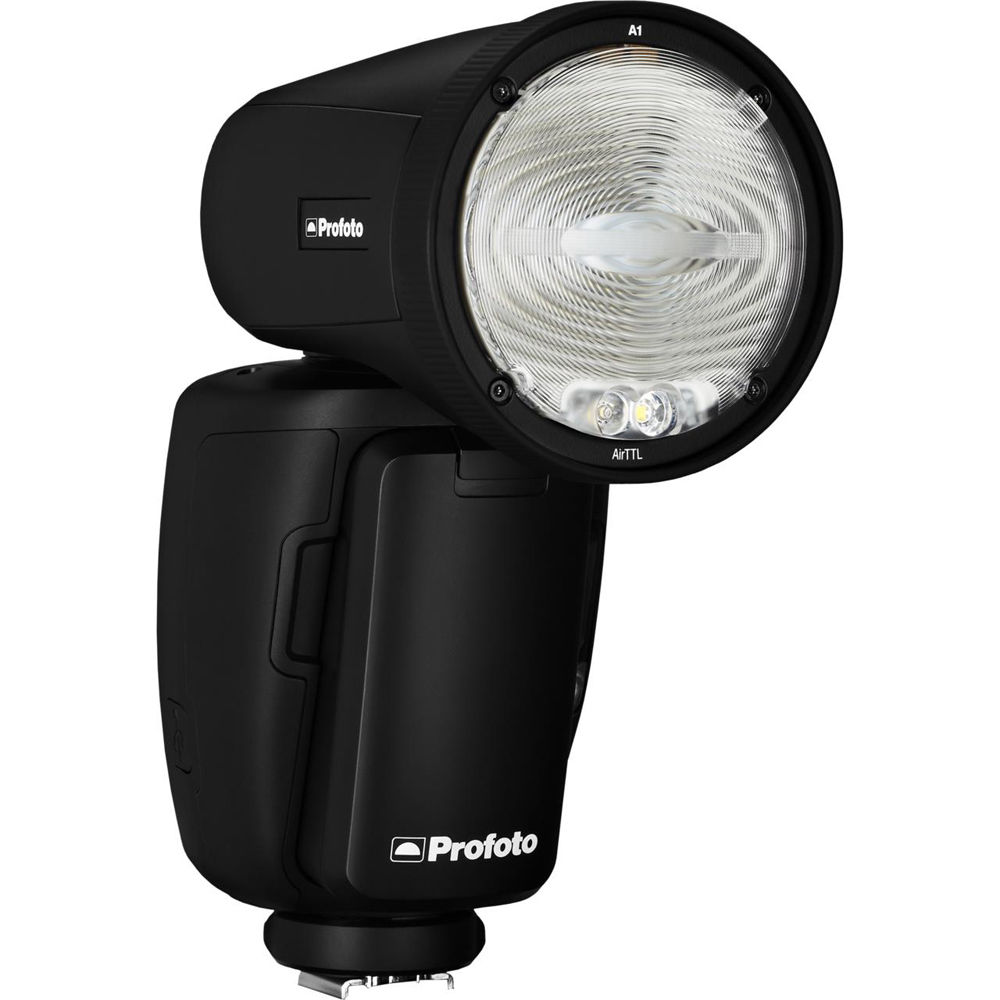
Profoto is my preferred brand for lighting gear, as explained in this article: Using Profoto gear on photo shoots and events.
For an on-camera flash, I really do like the Profoto A1 because of the way you can easily switch between TTL and manual, locking your flash power. Also, you can fire this flash much faster than any other similar flashgun, in my experience. Here is my review of the Profoto A1 flash.
- Profoto A1 flash for Canon (B&H / Amazon)
- Profoto A1 flash for Nikon (B&H / Amazon)
- Profoto A1x flash for Sony (B&H / Amazon)
Godox flashes

 next section: Using a flash bracket
Help support this website
If you find these articles of value, please support this website by using these Amazon and B&H affiliate links to order your photo gear.
I also offer photography workshops and tutoring sessions. There are also video tutorials, which are online workshops on photography.
Join us on the Tangents Facebook group for further discussions.
Neil vN
Books by Neil van Niekerk
Bigger is Better, is true, but also there are smarter flashguns as well ex. SB-600, for amateur or advanced amateurs…
if you are a full time photographer then bigger is Better if not then buy 2 x SB-600 (if your camera built on flash can support wireless ccommunication like D70 upward)…
Soran, true, but for me it would be more important to have a feature such as the flashgun being able to rotate 180′ either way. I can’t over-emphasize how important that is in getting the specific direction of light that you need to effectively bounce flash.
When I first started to use Canon’s system and hence the Canon 580EX flash instead of the Nikon SB-800, it was an epiphany. It changed how I used flash. That extra 90′ angle is far more important to me than any cost saving over a smaller flashgun. And that is something I tried to explain with this post and the image of the baby girl.
100% Neil! So important.
I’ll second Neil’s comment on the SB-600; while it is certainly an excellent flash, I very quickly became frustrated in not being able to get the head pointing to the critical spot where I wanted to bounce. Also, there is the added bonus that it has a PC sync connector meaning I can use my pocket wizards without a shoe adapter which I had to use with the SB-600. All worth keeping in mind if you think you’d be looking at upgrading your speedlight in the future.
Interesting: here in Europe (Spain in concrete) Metz is well known and appreciated. The Metz 58AF works quite well.
Neil, I recently discovered your site and have been enjoying the learning you provide here quite a bit! Thank you for your efforts! (BTW, beautiful photography!)
I’ve been learning photography for ALMOST 50 years now. I started with a simple camera (today, we’d call it a point-n-shoot!), 620 film, single shutter speed, flash without battery (it punched a hole in the bulb and the atmosphere caused it to burn!). Then I became one of my high school’s newspaper photographers. I used a Graflex Speed Graphic (2.25×3.25 inch plate film). I had a Honeywell Strobonar 600. It had a guide number of 80 (feet). Not a lot UNTIL you realized it was at ASA/ISO 25! You could light half of a football field with this light (IF you got above ground level. At ground level you’d just overexpose everything close!). This was my first experience with strobe flash units. To vary the output I put neutral density gels over the head. Move forward to 1980 and I purchased a Canon A-1 and shortly after got the 199A flash. At that time it was the most powerful hot-shoe mounted flash they made (they made a 533 and then a 577, but they were “potato masher” types similar to the Strobonar). Now, today, I have a Canon EOS 40D and a 580EX II (going to get 1-2 more 580’s in the near future for additional capabilities). I ALWAYS get the most powerful and versatile flash I can afford!
I’m just an amateur photographer (I tell people I’m a PHOTO-GRAPHER, not a PHOTOGrapher. I can do a great job of recording what I see, but NOT a great job of making it a GOOD photograph. I’m working on that! :)). Eventually I’ll probably get some studio lights just to provide greater capabilities!
Again, thank you for the site and the insight.
Hi Neil,
I was directed to your blog from people on the FM Forum. Thank you for your help. I have always loved photography and have taken some college classes but these last several years put it on hold to care for my grandchildren.I married young and my grandkids say their friends grandmother looks nothing like me-LOL.
Anyway what I have read here has been helpful and I am looking forward to checking out some of your classes and other articles.
I have a canon 30d camera and getting ready to buy a speedlite. I also have a Nikon Coolpix.I am looking at the 580EX ll but yes I am scared. It can not be controlled by the camera but I am guessing it can thru the flash settings itself? Any advice you can give me on getting back on track here I would greatly appriciate it.
As they say a picture says a thousands words and holds that moment in time you want to remember. I also love going out taking photos of old houses fields etc. Along with the animals. There is a beauty you can’t put into words.
Then on some I go back and do my magic as my husband calls it in photo shop. I do restoration, I started that when my mother had a photo of my Great,Great Grandfather and there were lots of pieces missing. The look in her and my Uncles eyes when I got done with it was priceless. I had to rebuild allot without a copy to look at! Several years later I found a small photo of him and I must say I did good! I have also taken slides and made prints and did touch up on those for friends. I think black and white along with selpia has a touch all its own that color can’t touch.
Anyway a brief summary about myself.
Again any advice would be welcomed on getting me started again. Now I am starting where I left off with the speedlite. Next year I want to do my Grandson Graduation Photos and several of his friends want me to do theirs just from seeing work I have done. I am told I have the eye and passion my teachers, friends etc. I take constructive criticism well. looking forward to hearing from you soon.
Awesome advice so far:)
Hi there Vicki!
For your Canon 30D, I would definitely recommend the 580EX II.
I’m not sure what you mean that the flash can’t be controlled from the camera? I know the more recent cameras like the 1D mk III and 5D mk II, allow you to control some flash options through the camera’s menu .. but these aren’t really of huge importance over doing the same thing on the flash unit itself.
And with TTL flash, the flash exposure is controlled by the camera itself. Which is the beauty of TTL flash technology.
I hope this helps.
Hi, I’m an amateur photographer here trying to learn a little more about my new hobby. I have a D40 and SB400 flash. I want to buy a new flash but SB900 is out of range, is there anything else that you would recommend me to look at that is not as expensive? I want to slowly get into photography and eventually make it more than just a hobby but for now I’m still learning. Thanks for your help.
Isa I would recomment the Nissin di866 which is a Nikon (and Canon) compatible TTL flash. It’s comparable to the Nikon SB800 which is a tad below the SB900. The Nissin is priced between the SB600 and SB900 (about $300-320).
I have one of these myself on the D40 and it works really well (have some experience with the SB800 too).
It’s not as well constructed as the SB800 and SB900 but it’s close. The size is about the same as a SB800, but the Nissin is more powerful and it’s easier to use. It does however only rotate 90 degrees to the left and I can see the problems with that. But that hasn’t bothered me… yet. In TTL mode it seems to work very well with the D40 and I believe the days are past when you had to buy OEM flashes for your camera.
Google some reviews on the Nissin di866 for more information.
I decided on the 430EXII and have not once in eight months wished I had anything else, anything more. If I decide to pick up a second, I’ll get the 580 as I already have the slave unit.
For an “advanced amateur” the 430 was a perfect choice
I bought and thought the same thing until I wanted to bounce over my right shoulder. Guess what…only 90 degree swivel to the right. Got me a 580EX shortly there after.
I primarily use the 580EXII on my 5DMKIII and – up until now – have used the 430EXII on my 7D with 70-200mm (I also use the 430EXII on stands for rim lighting etc) That 430EXII has been rather frustrating given it doesn’t quite swivel far enough in one direction plus it simply feels a tad too lightweight and underpowered. That is why I have just invested in the 600EX-RT and transmitter. Now the 7D has a friend that can pump out the light in any direction and the 430EXIIs are just backup flashes or for rim lighting etc. Happy Days!
Hello Neil,
Is there any particular reason you do not promote the use of Quantum Flash? Quantums most likely are more powerful throwing off more light, don’t you agree?
Kevin, I did use the Q-flashes as my workhorses at some point. I’m a fan of their equipment.
However, for more control and finessing of our flash photography, there isn’t anything better than a top-of-the-line speedlight.
For example, I can get a delicate fill-flash at even high ISO settings like 1600 ISO … something which I haven’t been able to match at all with the Q-flashes.
So for photography which is fast-paced and where I need to be able to adjust my flash for a variety of available light scenarios, a speedlight is clearly the better choice.
But where I need a workhorse flash that I can fire for an extended time without fear of melting, then the Q_flash is an obvious choice.
Also, for the newer photographers just dipping into flash photography, a speedlight makes a lot more sense.
As a newbie to DSLR, I bought a Sony Alpha which allowed me to use the lenses of my existing Minolta 35mm SLR for both cameras. I’m now looking to buy a flashgun/speedlight but the choice seems overwhelming. The main choices seem to be Metz, Nissim or Sony and the last seems to be the least value for money. Budget is tight, what would you recommend?
Strider, my instinct is always to go for the proprietary name brand. They had insight in how they engineered everything to fit together. Third party equipment is reverse engineered to work with the chosen system. As such, you’re never quite sure if they were able to match the electronic and mechanical design of the camera system.
So for me the decision isn’t $$ driven here, but rather by how well the equipment matches in the system, and how well it works together.
Sir i have a metz 45cl 1 speed light can i use this speed light with a nikon d60
i hope the circuit in the camera will not damage,what attachment should i have to use to operate the flash on the camera please guide me
waiting for your reply
thanking you
vijaya kumar
Vijaya … I have no experience with the Metz flashguns, but I am sure you could use it at least in manual and auto modes. If you want, you can post your question on the forum, and see if anyone there with experience of the Metz can tell you more.
Neil, have you ever had your sb900 overheat. What type of batteries do you use and do you have a technique to us for overheating. Do you use other features such as center flash, even flash.
Thanks
Merry Christmas to you and your family.
I have the thermal protection disabled on my SB-900 speedlights. I have burnt a few of them out with use, but so did I with my SB-800 and 580EX ii speedlights.
I still think the Nikon SB-900 is the best speedlight ever made, just as I mentioned on my original review of the Nikon SB-900.
We just bought an SB-700 for our D700 before reading this post, hope we don’t regret it! We already had an SB-600 for our D90 and I did alot of bouncing with it, but I don’t feel like I really knew how the getting the proper exposure with the TTL settings worked. It was like hit or miss. Now I feel like I understand it alot better and hope that I can put these flashes to good use!
This is a really great article! I’ve been looking into speedlights for a while now but I didn’t know what kinds of questions I should have been asking. Thanks for all the great advice.
i would recomend the sb700 over the 900 and for sure over the 600 to a beginer
My biggest criticism of the SB-700 is that it doesn’t take an external battery pack. That excludes it from heavy use.
Hello Neil,
I ma an event photographer and are often asked to shoot guests around the dinner table at a function. The lighting levels can be quite low so I prefer to use flash.
Use a canon 5d mk 11 with a 580 ex flash gun. In ttl mode the camera shots at 1/60 f4 which has shallow depth of field. Would prefer to use AV at f11 but the shutter speed is slow and cannot be hand held. Using a tripod is difficult in a confined space.
Have thought about setting camera and flash to manual and adjusting the power ratio until results acceptable
Appreciate your thoughts and comments
Steve
Steve, you’re making it needlessly complicated.
Shoot in manual exposure mode with your camera, setting your camera to what *you* need. Disregard the ambient for now.
Then shoot with your flash in TTL mode. This will take care of the overall exposure.
At some level, when you want to bring your ambient light in enough to give you some sense of where your subject is, then you can drag the shutter.
Start with this. It’s simpler than trying to fight with the camera in Av mode.
I have a Nikon D7000, Since the days of film, I have kept my Nikon SB-24, and Sb-26. These flash guns are amazing for their age, and have never let me down. I have zero issue with them. I see no need to upgrade them. they do all I ask of them, and then some. Don’t have all the bells and whistles, but haven’t any need for them either. They have performed flawlessly and look virtually as new as when they were purchased…don’t get me wrong, these newer flashes, SB-700, Sb-800, and the Sb-900’s are fantastic. Your thoughts on these older workhorses Neil?
The older speedlights will work very well … in Manual mode or Auto mode.
I do like TTL and use TTL mode so often, that is an essential feature for me. But if one has no need for that, then the older speedlights are great workhorses still.
Hello Neil,I love your work. I have a Canon Speedlite-420 which doesn’t have the manual option, I use it TTL. However i like to use Aperture Priority… but the flash won’t always fire in this mode when I would like it to (Particularly when I’m indoors & handheld) Have you any suggestions? Or perhaps I need to update my speedlite? Many thanks Marie
Marie … it might just be that you have your camera set to a mode where it doesn’t fire the flash if it thinks there is enough light?
It’s going to be tough to figure out at a distance what is going on there. We would need a lot more info, and some sample photos.
I just got a Yongnuo YN568EX and have been extremely pleased, that fact that it is only about a third the price of the SB-910 makes it a great choice. There are a few options it does not have, but thus far I have not noticed them.
Hi Neil,
I have a bought a new Nikon D5100 and I am a new entrant in the photography world.
I have no plans to go professional though but use it to click some memories of my freinds and family.
Your article has really inspired me to go for a new flash gun. You think I should go for SB 600, will that be usefull for my personal use???
Hi Neil,
Love your site, advice, and all. I am wondering (and I don’t believe it is your specialty) if you have a suggestion for a flash for shooting long lenses? I am talking 400, 500 and 600mm? I use your rear and side bounce flash techniques and really like the end results so much better than direct or ceiling bounce – no comparison. I notice that when using this bounce technique in pretty low light and moderately slow shutter speeds, that a side benefit that I am achieving is a great freezing of motion with nice sharp images that show mostly the natural light but a little support from the bounced flash light.
My question is regarding this support in freezing action. I want to accomplish this same affect with a longer lens and know from experience with a shorter lens (ie. 200mm) on fast moving subjects, that even at 1/16th power, the flash really freezes most of those closer fast moving objects. Is it really possible and pragmatic to accomplish the same with a super telephoto lens of a subject that is 50-100 feet away (obviously no bounce, but having some “fill” affect).
What flash would you suggest for this purpose, using a Canon system? Also, what about flash sync times, with Canon in the 200-250th of a second. Would the flash have any impact if I am shooting a shutter speed of 500-1000th of second?
Chris,
Yep! Here you go mate.
http://www.outbackphoto.com/the_bag/brad_fillflash/essay.html
http://www.bhphotovideo.com/c/product/427602-REG/Visual_Echoes_FX3_FX3_Better_Beamer_for.html
Hello Neil,
I purchased a Sony A7 after hearing the pro-raves, knowing that I would have to be patient for more full frame “E” lenses to be released.
But what I didn’t know is the difficulty I would have purchasing a “top of the end” flash that would be “FULLY”-Compatible…to bring out ALL the A-7’s abilities and
“NOT OVERHEAT”.
I like the ability of radio communication combined with camera control without adding other devices.
Will the Canon or Nixon top end flashes be fully compatible with the A7? Or to expand…would the Metz or Nissin top end flashes that are supposidly listed for Sony bring out all the A7’s abilities…I have heard that because of the changes Sony products their top end flashes either overheat or do not allow complete compatibilty.
Any advise?
Which flash would you purchase?
Thank you, Casey
It would appear that the latest software updates took care of the Sony flashes’ tendency to over-heat. Maybe they are the best option now?
Hi Neil!
Have you ever noticed compatibility issues with cameras and flashes as you change to newer models?
For example; I still have the original Canon 5D and the 580EX works great on it. However, when I put the 580EX on a 1DS MKIII it just simply doesn’t work. I can make it work by riding the FEC or I can switch to to a 580EX II, which works better in the same conditions that the 580EX didn’t. I also have a 5D MKII and see the same results. Because of the results I see with my original combination I know everything is working, and all my cameras are up to date with firmware. Does the TTL just see differently through the different camera models or do you think there are communication issues with the older flashes? I thought about upgrading to the newest Canon flash, but wouldn’t want to waste my money if the opposite problem surfaces (newer flash / older camera). Have you ever experienced this?
Thanks for your time, and thanks for the great website.
Regards, Tim
I haven’t experienced something like that – I usually upgrade everything over time – but I wouldn’t be surprised if your experience was a regularly occurring one.
Thanks Neil.
I searched your site again and found the comments you made in 07- metering techniques:
With Canon, this varies. With my 1D mk2 bodies, I usually kept my flash exposure compensation to
+0.7 as a default starting point. (I’ve heard of 20D shooters doing the same.) With my 1D mk2N bodies however, I’ve found that a default of 0 flash exposure compensation is best. (5D shooters have reported similar.) Also, with the 1D mk2(N) bodies, I have set Custom Function 14 to “Average”. I found that when my flash is the main source of light, that using “Average” here gives me the most predictable results. But when I need to use the Canon flash for fill only, then I get more subtle results with the flash metering set to “Evaluative”.
I like to grab camera bodies based on what lens happens to be on it at the time, but I guess I have to be aware of what works, and how, with each combination. Maybe I will go for a new flash and see how it talks to my cameras.
Thanks again!
Hello,
What do you think about godox/flashpoint for Nikon?
I have Nikon d800e?
Godox is the best value for money flash that is available right now.
I have used Nikon 800 with a Nikon SB-800.
But my SB-800 is 10 years old and is now having very long recycling times so I am evaluating a replacement flash
Options are a GODOX LI ion flash a Nikon 5000
https://www.bhphotovideo.com/c/product/1341867-REG/godox_v860ii_f_nikon_kit_v860ii_for_nikon_kit.html
Godox seems to be quite popular..Will the godox integrate well with the Nikon TTL system ?
What will be your recommendation
I have used Nikon 800 with a Nikon SB-800.
But my SB-800 is 10 years old and is now having very long recycling times so I am evaluating a replacement flash
Options are a GODOX LI ion flash a Nikon 5000
https://www.bhphotovideo.com/c/product/1341867-REG/godox_v860ii_f_nikon_kit_v860ii_for_nikon_kit.html
Godox seems to be quite popular..Will the godox integrate well with the Nikon TTL system ?
What will be your recommendation
Probably too late for you, but possibly for someone else coming to the thread, the V860 II-N can actually integrate pretty well with Nikon TTL, if you’re planning on using the optical CLS/AWL wireless system. It can be both commander and slave in that system, as can the cheaper AA-powered TT685-N (they’ve dropped that function from the newer V860 III and TT685 II models). But if you plan on using legacy Nikon speedlites, it works, but you’ll have to attach Godox X1R-N receivers to the feet of any Nikon SB speedlights you own, and right now with the Great Covid Chip Shortage, X1Rs seems to be in short supply. Most folks moving from OEM speedlights to a Godox system end up just swapping their OEM units for Godox speedlights for the convenience of built-in radio transceivers.
Hi Neil,
I took your class and read some of your books years ago! What on camera flash modifiers work best with round head flashes like the Godoy V1?
Hi there Kurby!
I use the Profoto A1 which is what the Godox V1 is based on.
For indoor flash photography, I still use the Black Foamie Thing for on-camera bounce flash.
For off-camera lighting, I use the Profoto OCF Adapter, which is expensive, but works like a charm.
Here is a video where I use it:
https://neilvn.com/tangents/off-camera-flash-profoto-ocf-adapter-using-a1-a1x-a10-flashes/