spacer
spacer

Tangents

review: Canon 70-200mm f/2.8L IS II USM

May 15, 2010

review: Canon 70-200mm f/2.8L IS II USM

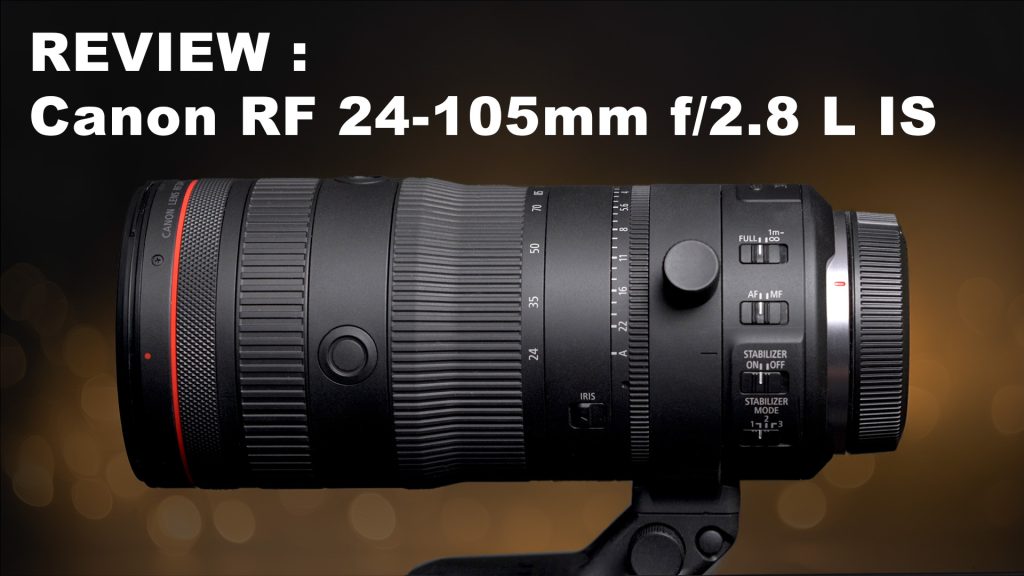
Courtesy of B&H, I had a copy of the brand-new Canon 70-200mm f2.8L IS II lens to play with for review purposes.  The lens is touted to have improved optical quality, faster auto-fousing, and much better stabilization than the much-loved previous version of this lens. Using the lens on different shoots and walkabouts and tests, I got a fair idea of how the lens performs.  In short, the lens is all that .. faster, sharper and with better image stabilization.  Noticeably so.

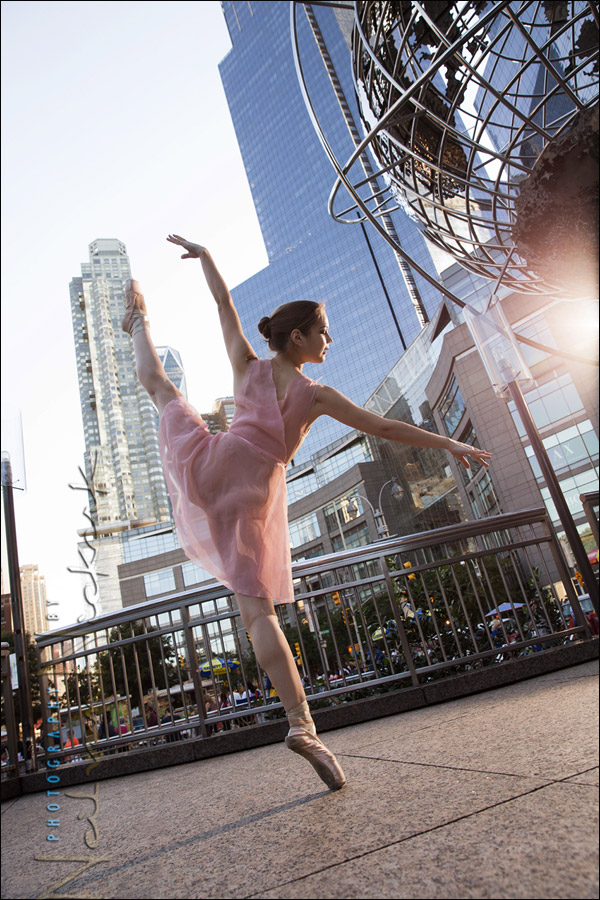
The bokeh of this lens is pleasant.  Easily seen in this portrait of my little model, where she is busy collecting feathers.  (And to go off-topic for a moment:  shallow depth-of-field is not the same as bokeh.)  Anyway, this lens has pleasant bokeh. Other lenses might render the background even smoother, but the bokeh in this image above isn’t harsh and intrusive.  The image above was shot at f3.2

My main disappointment with the lens is that it looks so much like the previous version.  The focusing grip is slightly different, and the lens is a touch longer by a few millimeters.  They are quite hard to tell apart. The disappointment would come in that no one would really know you had just spent a small truck-load of money on a new lens.  Unless they bothered to read the numerals on the front lens barrel.  At least Nikon had the courtesy to make their new lens look substantially different.  Easier to swagger with the new gear. ;)

But the Canon 70-200mm f2.8L IS II (B&H)  is definitely a good-looking chunk of glass!

Let’s see how else this lens might impress us ..

(more…)

       Comments (19)


Canon E-TTL flash settings – Average vs Evaluative flash metering

April 18, 2010

Canon E-TTL flash settings – Average vs Evaluative flash metering

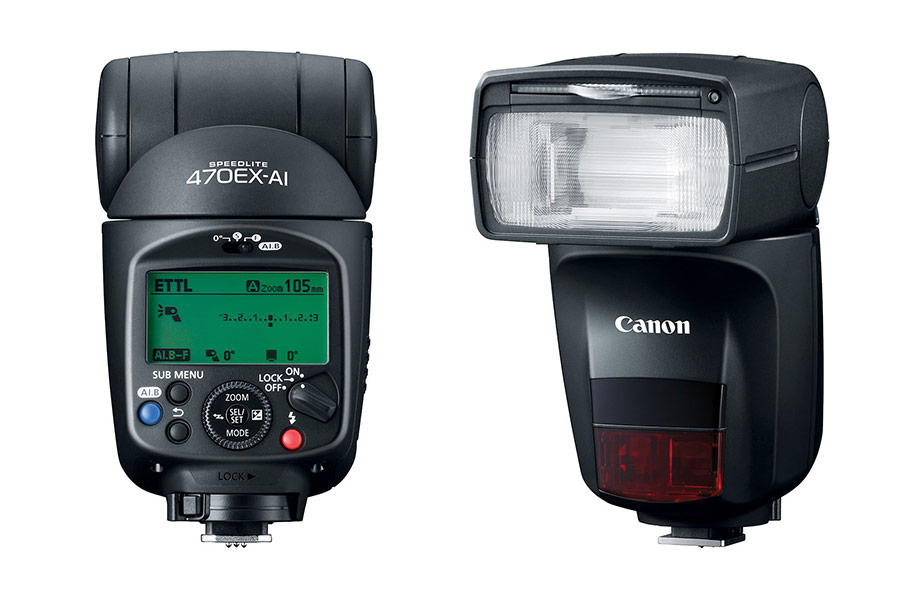
With TTL flash, (or E-TTL, as Canon call their specific flavour), the camera and speedlight working together according to various algorithms to control the flash exposure. The E-TTL flash exposure will therefore depend on various factors – the tonality of the subject and scene; the brightness of the scene; and how the camera interprets the sections of the metering pattern.  Other factors quite possibly also includes data from the lens.   How these factors inter-relate, we can only make educated guesses; and many photographers have taken time and effort to do test shoots to see how the cameras and speedlights work.

To make things even more interesting, Canon offers two modes of E-TTL flash metering: Average and Evaluative. This is set on the camera body via the custom functions.

The way I understand this to work, is that with Evaluative flash metering, the Canon camera takes the ambient light into account when calculating the flash exposure. With Average flash metering, the flash metering would appear to be de-coupled from the ambient metering, and the camera is less biased by the available light.  (I’m quite willing to be corrected on this.)

So which E-TTL flash exposure mode to use? Average or Evaluative?
In the end, I work in a fairly simplistic way …

(more…)

       Comments (9)


review: Canon EF 100mm f/2.8L Macro IS lens

October 30, 2009

The specialty of a macro lens is in allowing you much much closer to your subject than a normal optic would .. with the ease of continuous focusing from infinity to the closest distance.  No need to screw in additional rings or lenses or reverse your lens.  A macro lens works as a close-up lens, and as a more usual optic.  And that’s the versatility of it.

hands-on review: Canon EF 100mm f/2.8L Macro IS lens

The main feature of the new macro lens is that it offers stabilization.  Now this might not seem such a big deal to photographers who work with a tripod and photograph more static subjects – but the moment you want to shoot on the move, and play around fluently with your composition and angles – then using the lens hand-held becomes a huge advantage.

Instead of photographing the usual macro subjects – flowers and insects – I decided to test the Canon 100 mm f/2.8 IS macro lens (B&H), during a portrait session with a model, Annisa.  

In the photo above, my settings were 1/200th @ f3.2 @ 400 ISO.  In testing the lens with and without the IS enabled, there is a clear difference in the crispness of the (handheld) images.  There’s no doubt that the IS works, and is a major improvement on the previous generation of this lens ..

(more…)

       Comments (18)


the Best Camera in the World ..

April 25, 2009

the Best Camera in the World ..

.. will be the one where the camera manufacturers allow me some input into the matter.  If only Nikon and Canon (and Pentax and Fuji and everyone else) would just gather around a table and listen to me.  If only …

When I get to handle a new camera, I often wonder why the manufacturers designed a camera the specific way they did.  It might be the strange placement of a button or control; or the omission of a feature, or even the deliberate hampering of features in the non-pro bodies.  Sometimes I just wish they would bring in a feature that I love on another camera.

Here are the gear-head musings on what I would insist the Best Camera in the World would be like, if I had any say in it.  (Sorry, but that means this posting will have a lot of words and no images this time around.)

Firstly, the Best Camera in the World would have to be a modern full-frame digital SLR camera (D-SLR)  for the combination of accessibility, versatility and image quality.

I recently moved from using Canon 1D mkIII bodies to using Nikon D3 bodies.  Personally, I think the Nikon D3 is the best camera that has ever been made to date.   But there are a number of pros and cons, and not everything falls in favour of the Nikon D3.  Therefore most of this post is a comparison between these two cameras, and which things from either camera I would want to see in the Best Camera in the World.

But before we even get there, I have to touch on something - Exposure Modes.  Both these cameras fall down sorely when it comes to how the exposure modes are accessed.  Pentax’s ingenuity here towers over them in this regard.

(more…)

       Comments (41)


common wisdom – Canon’s TTL flash vs Nikon’s TTL flash

March 25, 2009

One of the frequent topics on the various forums is the Canon vs Nikon debate … and one of the usual replies is that Nikon is better in certain ways, and Canon is better in other ways.  And the common wisdom that Nikon’s flash system is superior to Canon.  And this seems to be accepted as one of those general truths.

Now, having shot primarily Nikon for a few years (D100 / D2H / D2x), and then Canon (mk2 / mk2N / 5D / mk3), and now Nikon again (D3) … I have this observation about Canon’s flash system vs Nikon’s flash system … they are different. 

Disregarding wireless TTL flash, where Nikon is ahead in simplicity of operation and how much control you have – if we just look at TTL flash in various situations – I honestly can’t say the one is better than the other.  Just that they are different.  So I have to go against the common wisdom there.

But they are different in ways that aren’t easy to quantify.  Where I’m used to Canon’s TTL flash responding in a certain way during different situations, the Nikon flash needs different flash exposure compensation.  So it responds differently, and I have to get used to it again.

This is going to be a long post and I’m afraid the point of what I am trying to say might get lost along the way.  So here it is right at the start already:  When it comes to any particular TTL flash system, just become familiar with it.  You can then make it work. 
As simple a point as this … get used to how your particular camera and flash respond, and adjust your technique accordingly.

So, down to business …

(more…)

       Comments (61)


camera settings: Canon EOS-1 D Mark III

December 31, 2008

One of the advances that the Canon EOS-1 D Mark III  bodies made over the previous generation 1-series D-SLRS, is in an easier menu system – especially the ‘My Menu settings’.  So while the menu system of the mk3 makes it easier to adjust settings, My Menu settings allow you to change a few of them on-the-run without having to delve into different parts of the mk3 menu.

Here is how I had my cameras set up:

(more…)

       Comments (0)


broken Canon 580EX II hotshoe foot

August 30, 2008

One of the most visited pages on this website is the instructional post on how to repair the foot of the Canon 580EX speedlite.  Since the foot of the original 580EX is made from plastic, it is easy to break … but also easy to repair.

I broke the foot off my 580EX II some time back, by lowering my camera too fast to the ground by the strap.  The camera and lens tilted over, and the flash smacked the ground a touch harder than the gentle soft landing I anticipated.  Because the foot of the 580EX II is now made of metal, there is nothing to give, except the body of the speedlight.  And this is what happened:

That’s right.  The entire foot snapped off the body of the flashgun.  And that isn’t just a quick home repair.  It meant sending the speedlight off to Canon for repairs.  Much more expensive than the same type of problem with the original 580EX.

Funny how the metal foot of the 580EX II seemed like an improvement over the plastic foot of the 580EX .. and somehow it ended up not being an improvement in real terms.

So, sorry, I don’t have good news for you if you break your Canon 580EX II in the same manner.  You will have to send the speedlight in for repairs.  Such is the price for improvement.  :-/

If you found this and other articles valuable, then using these affiliate links to order equipment & any other goodies, would be a welcome way of helping towards the cost of hosting this site.
Thank you!

       Comments (11)


dreamy goodness: Canon 200mm f2 L IS

July 29, 2008

Canon 1D Mark III – Canon 200mm f2 L IS USM (B&H) – 1/300th @ f2 @ 125 ISO
[ click on the photo to see a larger image]

Canon recently upgraded their legenday 200mm f1.8 with an 200mm f2 version which has Image Stabilisation.  So out of curiousity I rented this lens from LensProToGo, to play with it and test it out.

Here is the beast of a lens:  the Canon 200mm f2 L IS USM (B&H)

This is the kind of lens which is best used (or in a way ONLY to be used) at its maximum aperture.  That wide aperture of f2 gives you an incredibly thin depth of field, and hence, that dreamy background.  This of course wouldn’t mean much if the lens itself wasn’t crisply sharp at f2 … and in fact, on checking my images at 100%, this lens proved itself to be count-the-eyelashes sharp at that wide aperture.

(more…)

       Comments (36)


Canon 1D mk3 – error 99

August 13, 2007

There have been many reports on the forums on the softness of the images on the preview LCD of the Canon 1Dmk3.   Well, I couldn’t really tell with this on my LCD display …

Yup.  Within about 200 frames into that first shoot with this fresh-out-of-the-box camera, it died on me with chronic error 99 lock-ups.  The camera would lock up on every alternate time the shutter was tripped.

To Canon USA’s credit, they repaired the camera in a super-fast turn-around time of 24 hours.

Other than that, I absolutely love this camera. No, seriously.  It is a fantastic machine.
If only it would work like it should.

       Comments (1)


tightening the hotshoe on the Canon 1D series

August 3, 2007

fixing a loose hotshoe on a Canon camera

I had someone ask how easy it is to fix a loose hotshoe on a Canon 1D series camera. Somehow the 4 little screws that hold the hotshoe to the camera body can wriggle loose over time, causing the flashgun to wobble.  This can even lead to poor contact between the flashgun and the camera.

Fortunately, it’s a very easy fix.
All you need is a set of jeweller’s screwdrivers.
This image should explain it all …

(more…)

       Comments (12)


Older Posts »


All Rights Reserved © 2006-09 | Client Login