Best photography purchases of 2016
Best photography purchases of 2016
The lists of best photography purchases from previous years received a lot of interest and comments. The somewhat amusing thing looking back at those lists, is that I have since sold some of the equipment - I either upgraded, side-graded ... or changed direction. Such is the fluid nature of photography technology, and also running a photography business. Things change. Similarly, this year, there were several pieces of photo gear that I bought that I hope will make a difference. Well, better than just "hope", I plan on them making a Read more inside...Photography tips – camera bags

Photography tips - camera bags
When I have an assistant help me out on the shoot, one of the first things they are informed of - and there is no flexibility on this - you have to zip up any bag or roller case so that the zipper tags can be seen right next to the handle. In other words, you always zip up to the top (or to the handle). This means that any time you reach for the bag, you can immediately see whether the bag's lid is closed properly. Let's say for example you close the zippers to the bottom, then you don't have that immediate visual clue that you can actually pick up Read more inside...Gear list – Starting out with off-camera flash

Gear list - Starting out with off-camera flash
You can get great lighting with just on-camera bounce flash when shooting indoors, as shown in this related article - Lighting with bounce flash. But at some point you might want more flexibility and consistency. Or you might run into problem scenarios with bounce flash, such as colored walls and ceilings. Or you might run into a situation where you can't use any bounce flash at all, and the available light isn't ideal. Then it is time to step it up with off-camera flash. Starting out with off-camera flash photography might seem Read more inside...Best photography purchases of 2015
Best photography purchases of 2015
Last year's post on the best (and worst) photography purchases turned out to be quite popular. So many responses! Some needed to vent a bit, and also declare their love for favorite pieces of photo gear. In the same way, looking back over this past year, I'm sure you too are happy with some of your purchases, but inevitably, there will also be those purchases you regret. For myself, this was the year I decided I was going to calm down a bit with buying new gear - but then, plans change. Looking towards expanding what I do, I had to acquire some Read more inside...Ultra-wide angle lenses with stabilization / vibration reduction
Ultra-wide angle lenses with stabilization / vibration reduction
The need for stabilization in the ultra-wide angle lenses, might appear to be a slightly redundant feature. After all, camera shake is less of a problem the wider your focal length. On a 16-35mm lens, it would really seem to not be that important. Now, I sometimes second-guess myself about what lenses I need. And what the gaps are in the lenses I have. The Nikon 14-24mm f/2.8G (affiliate) is a modern legend, and I love it. But with the bulbous front element, it can't take filters. A polarizing filter and Read more inside...Best softbox for on-location headshot photography
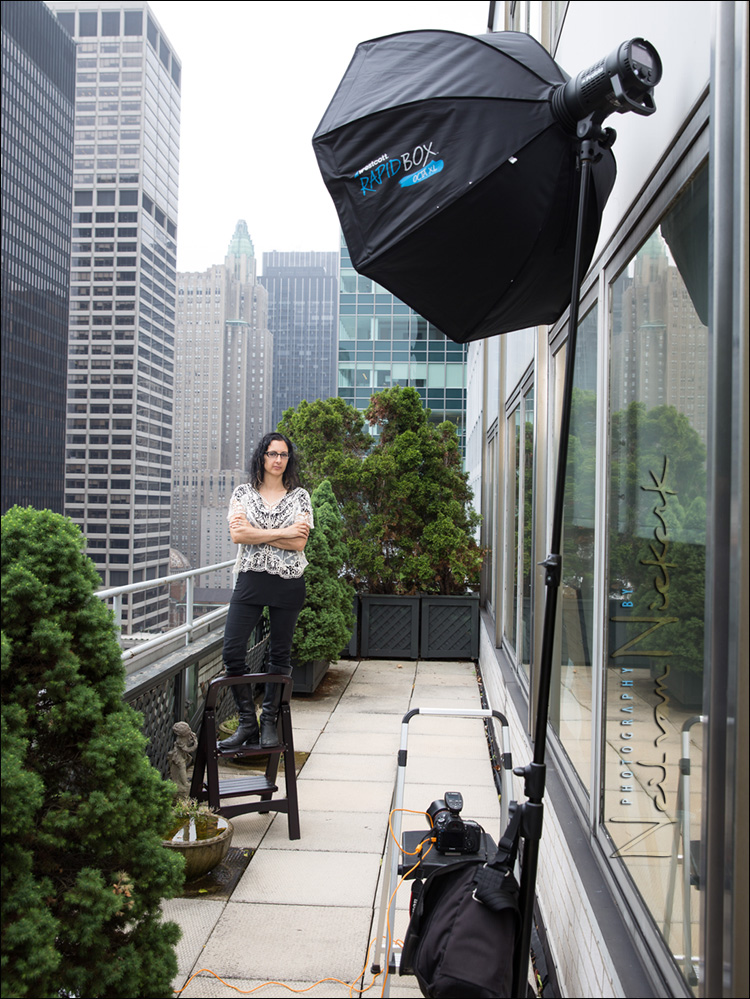
Best portable softbox for on-location headshot photography
I vary the lighting kit that I use for on-location portraits and headshot photography. It could involve multiple lights, or a single-light setup on location. My choice of lighting is most often decided by how complex it need to be, and the logistics of getting to the location and setting up. More than struggling with something, I detest the appearance of struggling with something. Let me explain - when working with clients, it all needs to appear smooth and efficient. Everything in place, and professional. No struggling Read more inside...Why use a high-resolution camera?

Why use a high-resolution camera?
The Nikon D810 (affiliate) is a camera that surprised me for how much I liked using it. The high resolution of this camera was a drawback for me initially. But it had very responsive AF. Also, super-crisp images because of the improved sensor and due to the lack of the anti-aliasing filter. Ergonomics. (I have big hands.) But I didn't anticipate that I would love the D810 as much as I do. For a long while though I kicked against the idea of using a camera with a very high resolution. But then the Nikon D810 convinced me. There's a story Read more inside...Best photography purchases of 2014

Best photography purchases of 2014
Looking back every year, I'm sure you too are happy with some of your purchases you made in photography, whether gear or software or website related. Purchases that you love and made a difference to you as a photographer. But similarly there are also those purchases you regret. What was I thinking? I should've done my homework? In the past I've bought some spur-of-the-moment bad decisions. It is especially easy to get swept away at photography trade shows. But I've gotten better at it, especially unnecessary software purchases. So I am actually Read more inside...What else is in your camera bag?

Non-photography goodies in my camera bag
Work as a wedding photographer isn't just about taking photographs of key moments, or about the photo gear. Often enough it is up to you as the wedding photographer to help guide the day's time-line and flow, and also just to help. For me, wedding photography isn't just a passively observed event where I take photographs. And if you shoot with a photo-journalistic style in mind, it doesn't mean you have to remain uninvolved. I'm there to record the day's events, but also to help, if necessary, making it a spectacular day. In the photo Read more inside...- 1
- 2
- 3
- …
- 5
- Next Page »