
Why use an on-camera flash modifier that is black, instead of white?

Why use an on-camera flash modifier that is black, instead of white?
This question repeatedly comes up as response to the various articles here on my favorite light modifier - the black foamie thing. For anyone new to this, here are the two main articles on how I use a piece of black foam to flag my on-camera speedlight. The question invariably comes up: why a piece of black foam and not a white card or a piece of white foam? The short answer: The idea behind the BFT is that it acts as a flag, not a bounce card. Read more inside...When (not) to use rear-curtain flash sync
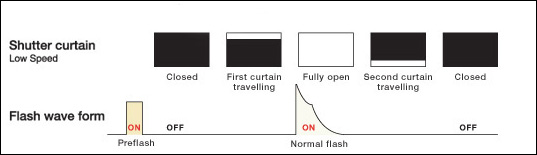
Rear curtain flash sync - potential problems
With flash photography, suggestions are often given that you should use rear-curtain sync. Most often for incorrect reasons. So here is when NOT to use rear-curtain sync flash ... whenever you don't need it. Sounds confusing? Well, let me explain ...Rear-curtain vs first-curtain sync
Your camera's shutter consists of two curtains that open, and allows the light to hit the sensor or film. This is true for all focal plane shutter film cameras, (as opposed to those with leaf shutters), and true for all digital cameras Read more inside...unsharp images – so what went wrong this time?

checking my technique to ensure sharp images
I love sharp images. Crisply sharp. However, I'm not stuck on the idea that the image has to be sharp over the need for an image to have impact. Images that draw us in, usually have emotional impact of some kind. But still, I like sharp. How sharp your subject appears, is a balance between a bunch of factors we have to balance,. These factors might be with careful forethought, or just something we intuitively adjust for. Shutter speed, choice of aperture, subject movement, your own movement, choice of equipment, and our own Read more inside...taking photos under the mid-day sun / hard sunlight

taking photos in hard sunlight / mid-day sun
A recent post on using off-camera flash, the question came up about how I work when I'm on my own and don't have an assistant holding up a softbox. Using off-camera lighting does make your options easier in how you position your subject, since it is much easier to have great portrait lighting on your subject. By adding light to your subject with the flash & softbox combination, you have the freedom to be less concerned about perfect light on your subject. When I work on my own, I approach things differently. I now have to not Read more inside...directional bounce flash
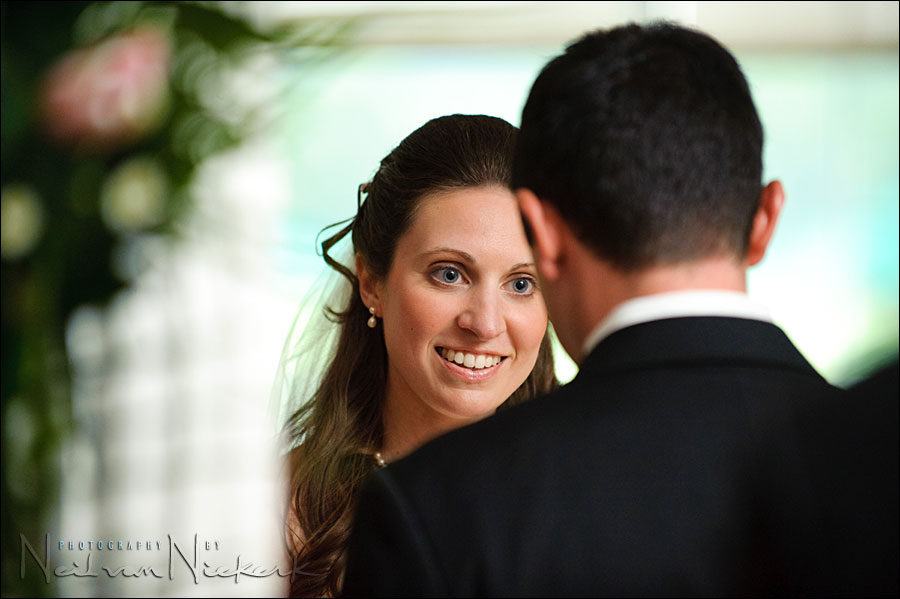
directional bounce flash
With this recent wedding - the same one as posted here- the ceremony was moved indoors because of the approaching thunderstorms. The ceremony was going to be held in the large reception room in the late afternoon, under the chuppah. I once again had no choice but to add flash to balance the shaded side to areas lit by window light. I want to post this image as an example again of how I use directional light from my on-camera flash. Instead of using a generic light modifier on top of my speedlight, I used The Black Foamie Thing. I was using the Read more inside...shutter speed choice with flash
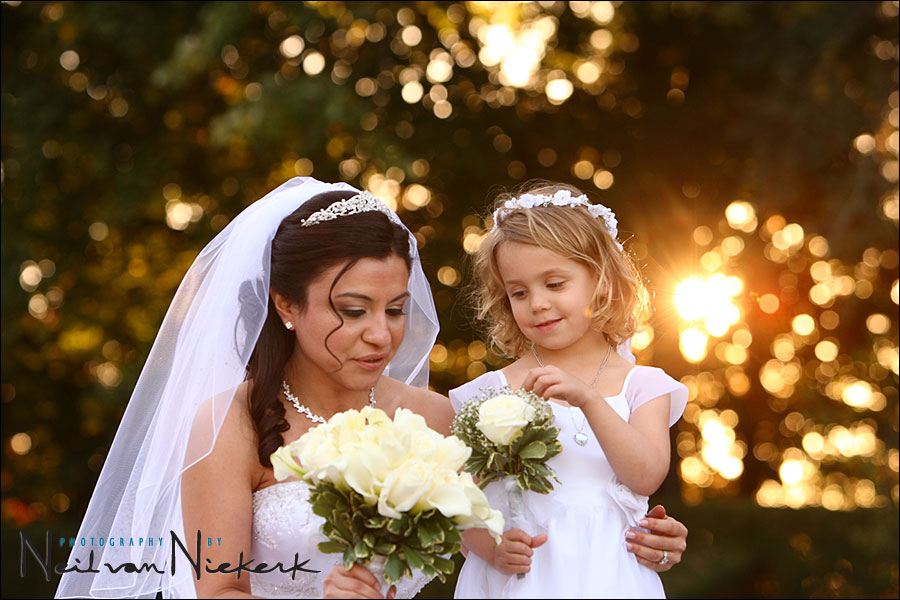
choosing your shutter speed when using flash
A question that I was asked via email, that I thought would be of interest to everyone: When using ambient light, I understand that you set your exposure using the camera's manual mode, then use flash to fill in. My question, when your shutter speed goes below that usually used hand-held, do you count on the speed of the flash to produce a sharp image or go to tripod or monopod? Or, increase either ISO or f-stop until you reach and acceptable shutter speed? This is entirely correct in that I usually increase my ISO or open my aperture, Read more inside...bouncing flash off walls outdoors for fill-flash

fill-flash outdoors by bouncing flash off walls
When I recently photographed one of my couples in Hoboken, we worked for a while in one of the colorful alleys. To lift the shadows a little bit, I used flash. However a softbox might have been overkill when just a touch of fill-flash is needed .. especially when there is a useful wall directly behind me. Read more inside...On-camera flash light modifiers? Remove the plastic diffuser cup!
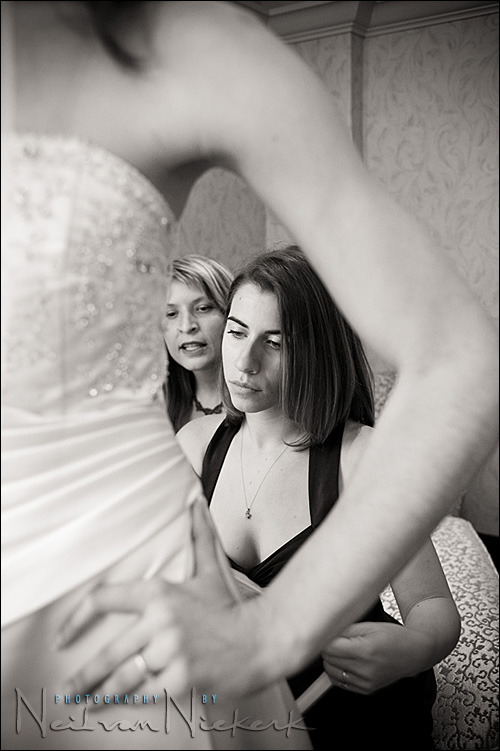
Choosing on-camera flash light modifiers
One of the things I always emphasize if you want to achieve the best results from your on-camera speedlight, is to be aware of the direction of light from your flashgun. When you know which direction you want your light from your flash to come from, then the simplest way to figure out what direction to bounce your flash towards, is to consider the simple geometry of it all. Yup, triangular geometry from your days in primary school. And from Science class in high school, you can also consider the Angle of Incidence = Angle of Read more inside...Shutter speed controls background exposure?
Shutter speed controls background exposure? Usually ...
Something I kick against when I try to teach others about flash photography, is the use of short-cut phrases. Those axioms that are supposed to help the understanding of how to mix flash with ambient light, can often mislead you since they don't give you all the information. Two of those phrases were recently discussed here: aperture controls flash exposure, shutter speed controls available light. These are merely reductions of the way that shutter speed, aperture and ISO inter-relate with available light and Read more inside...- « Previous Page
- 1
- …
- 9
- 10
- 11
- 12
- 13
- …
- 15
- Next Page »