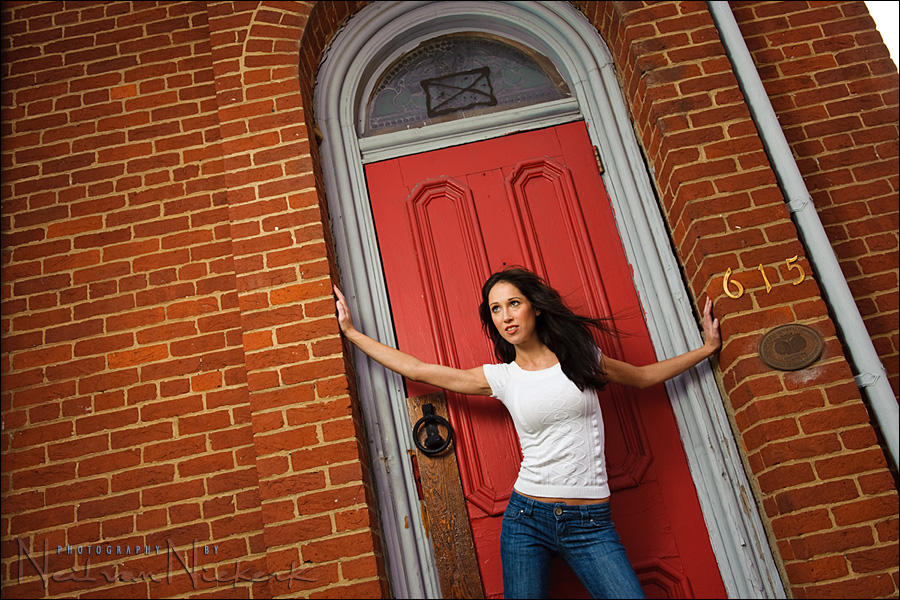
high ISO is no substitute for good light
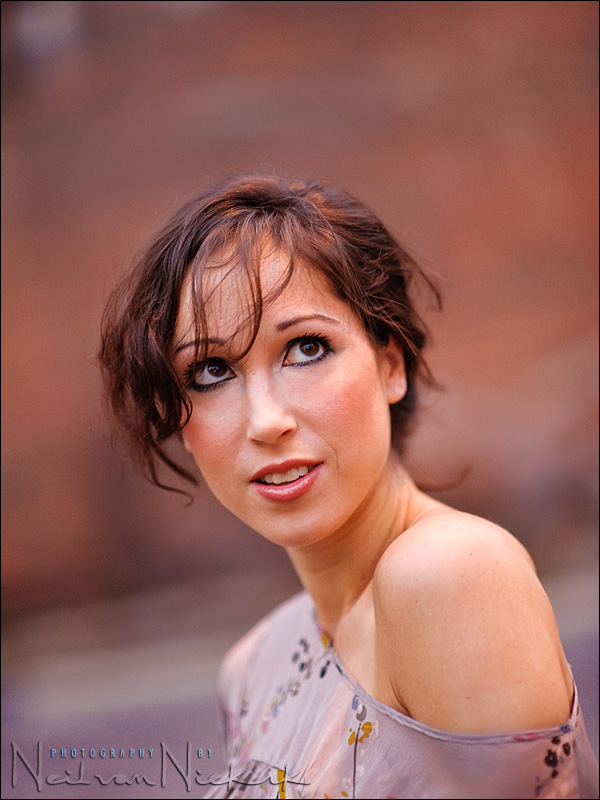
The light on Valerie here is from the evening sky, some city lights, and some of the parking lot's lights. All of this added up to give me enough light to use for a lovely impromptu available-light portrait of her, right there in the middle of the parking lot. My settings were: 1/160th @ f1.4 @ 1250 ISO My equipment: Nikon D3 and Nikon 85mm f1.4 The light was soft, but wasn't necessarily the best for a portrait where she is simply looking at the camera. Because of the surrounding buildings, the light was fairly top-heavy. So I asked Valerie to lift her gaze slightly - and in this way Read more inside...
machine-gunning a photo .. (model – Priscilla)
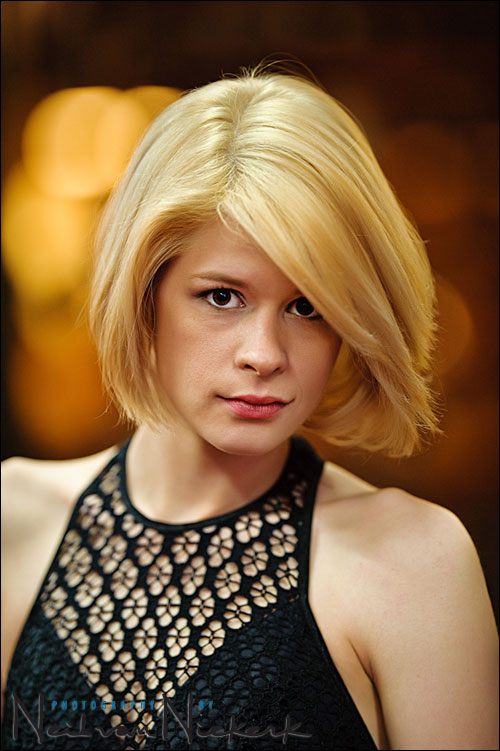
A technique I often use to get crisp images in low ambient light when I shoot without flash, is to simply put my camera on continuous drive, and let it rip for a second or so. So while camera shake may ruin some (or even most) images, I am usually sure of getting at least one image that is really sharp. I know this runs counter to so much of the philosophizing in photography - waiting for that oh-so-perfect-moment when it all comes together, and then with great precision and superb intuition of the moment you're in, to take the photograph. Much of my personal photography is driven by the Read more inside...
fluorescent lighting .. I give in! (model – Priscilla)

[ Nikon D3; Nikon 200mm f2 AF-S VR .. 1/100th @ f2 @ 1250 ISO ] click on the image to see a larger version My friend Steve Z from Colorado was around for a few days, visiting friends and family here in NJ. So we got together to do a photo shoot, and I arranged to meet up with Priscilla, a model with whom I've worked before. I also was fortunate in getting permission to photograph inside the Paterson museum - an interesting historic building. Steve Z is also into photographic lighting, so we packed up a bunch of gear - a beauty dish, softboxes, speedlights and video lights. We were Read more inside...
how much depth-of-field? just enough!
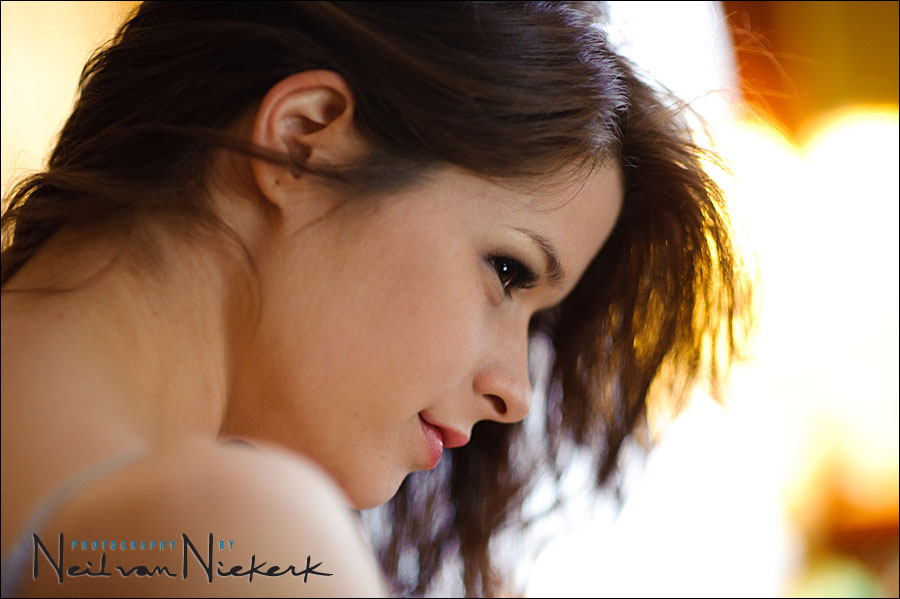
choosing the necessary aperture for depth of field (DoF)
Depth of Field (DoF) is one of those elementary factors in photography which seem to mystify most (new) photographers. A question that I'm often asked is, "How do you know how much depth of field you need?" Now anyone who has delved into the topic and has done some research knows that you soon stagger back .. your head spinning trying to tie together all the concepts: circle of confusion, focal length, subject distance, size of enlargement, format size, hyper focal distance, and so on. But a working approach might just Read more inside...Aisha, the belly-dancer ..
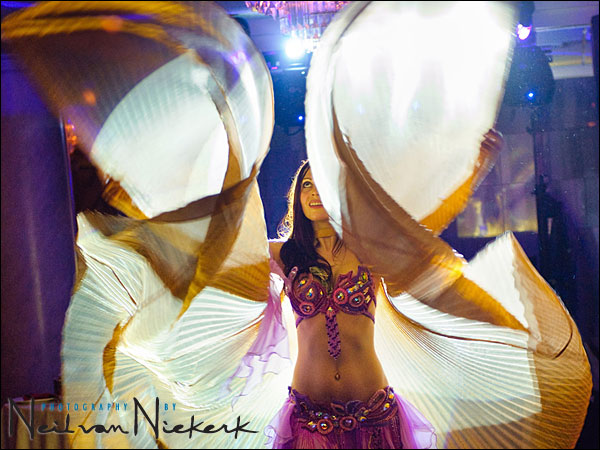
Aisha was the star at a recent party where she performed as a belly-dancer. Through several dance routines, I had the luxury of having enough time to move from just the safe shots, to playing around and getting more diverse images ... Read more inside...
Bounce flash – balancing foreground and background exposure

Bounce flash - balancing foreground and background exposure
Lighting for the impromptu portrait of this little cutie was simple - just an on-camera speedlight, bounced up and over my left shoulder. This gives soft directional light. A simple technique that works every time when using on-camera flash indoors where there are light ceiling and walls around. Settings: 1/250th @ f4 @ 1000 iso; TTL flash My exposure settings was determined by the out-of-focus garden area outside, seen through a large window. It was over-cast, and therefore not super-bright. This meant that the bounce Read more inside...Photography clichés
Photography clichés
Some sayings in photography are thrown out there so often that they've achieved a life of their own, and become truisms that are summarily accepted and then perpetuated. Here they are - the 10 most annoying platitudes in photography ... The phrase clichés in photography, implies visual clichés. But tastes differ too widely, and I wouldn't want to be the Style Police and dictate to other photographers which subjects and approaches are deemed cool. Besides, I think the world could always use more photos of pretty girls sitting on train tracks. So Read more inside...embracing tungsten light
wedding photography - working with incandescent light sources
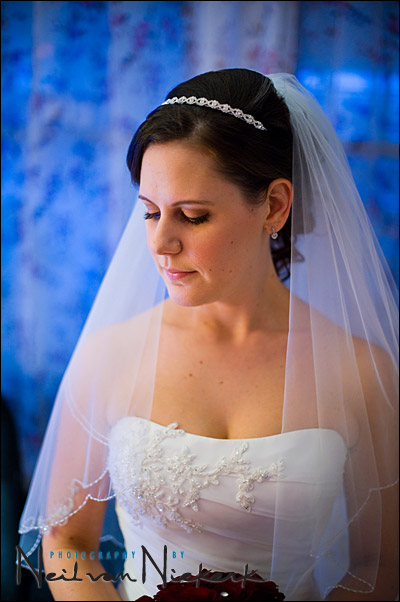
As a wedding photographer I obviously shoot all the time in ares lit by tungsten / incandescent light sources. With modern D-SLRs and fast lenses it is no problem to actually use tungsten light as my main light source. The photo above from a recent wedding, is a typical image where I used an existing incandescent / tungsten light source for a beautiful but simple portrait. Here I photographed the bride by the light of a lamp in the living room. No flash was used - just the lamp and whatever other ambient light existed Read more inside...tutorial: Maximum flash sync speed
tutorial: Maximum flash sync speed
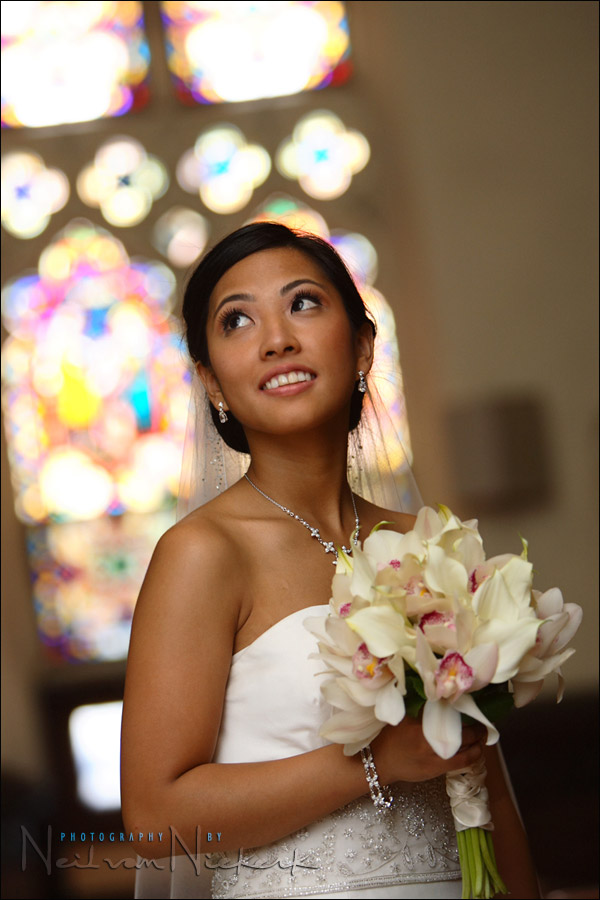
In previous postings I have mentioned that the specific settings for a photo aren't often of direct value to us in figuring out the method of exposure. But the one setting that is of huge importance when using flash, is your camera's maximum flash sync speed. When the ambient light levels are low, then your shutter speed can vary appropriately, depending on what you want to achieve. But once you work in bright conditions, or have your subject against a bright background, then most often it just makes the best sense to work at maximum flash sync Read more inside...- « Previous Page
- 1
- …
- 10
- 11
- 12
- 13
- 14
- 15
- Next Page »